Knowledge & Insights

Orthopedic Medical Blog

Stay informed with the latest surgical insights, clinical updates, technological advancements, and expert guides from Siora Surgicals.

0%

Choosing the right Radial Head Prosthesis requires more than comparing prices or polished product images. Global buyers must examine implant design, fixation method, bearing material, sizing options, and clinical support. A device that performs well in one hospital may not suit another patient population, surgical workflow, or follow-up system.

This guide introduces the main Radial Head Prosthesis types available in 2026, including monopolar, bipolar, modular, press-fit, and cemented designs. Each option has practical strengths and limitations. Some systems simplify intraoperative sizing. Others offer greater flexibility when anatomy is difficult. The difference may appear small on a product sheet, yet it can affect elbow stability, motion, and revision planning.

Details matter.

Our discussion reflects established orthopedic principles, published clinical experience, and the practical concerns of surgeons, distributors, and procurement teams. It considers implant materials, stem geometry, head sizing, instrumentation, sterilization information, and manufacturer documentation. Buyers should also confirm regulatory clearance in their target market and request traceable quality records before purchase.

No single design is ideal for every case. That point is easy to overlook. Patient age, fracture pattern, bone quality, ligament condition, and surgeon familiarity can change the decision. Long-term evidence also remains uneven across some newer systems. Therefore, this overview is not a substitute for professional evaluation or local regulatory review.

The goal is practical clarity: helping global buyers ask better questions, compare credible options, and avoid decisions based only on cost. Better selection begins with evidence. It also requires honest attention to uncertainty.
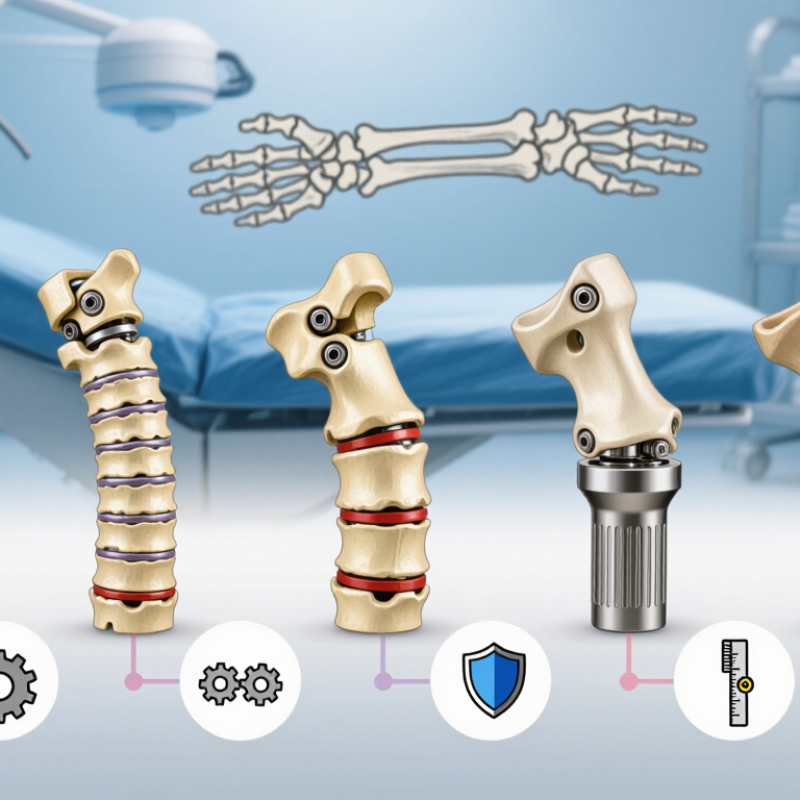
2026 Best Radial Head Prosthesis Types for Global Buyers?

Radial Head Prosthesis: Definition, Purpose, and Clinical Applications

A radial head prosthesis is an implant that replaces the damaged radial head near the elbow. It is usually considered after severe fracture, failed fixation, or painful post-traumatic arthritis. The radial head supports forearm rotation and helps stabilize the elbow during loading.

Small anatomy matters.

Common designs include monopolar, bipolar, modular, and fixed-stem systems. Their roles differ. Bipolar designs may accommodate changing motion, while modular systems help surgeons adjust diameter, neck length, and stem size. Selection should follow CT findings, ligament stability, bone quality, activity level, and surgeon experience.

Clinical evidence remains mixed. A systematic review in Shoulder & Elbow reported generally improved pain and motion after radial head arthroplasty, but revision and stiffness remained important concerns. The American Academy of Orthopaedic Surgeons also emphasizes restoring elbow stability rather than chasing perfect radiographic alignment. That distinction matters.

A component can look well positioned yet cause overstuffing, limited rotation, or capitellar wear.

Reports from AO Trauma and peer-reviewed registries repeatedly stress accurate sizing, stable fixation, and early controlled rehabilitation. However, long-term comparative data remain limited, especially for younger, highly active patients. Global buyers should examine published survivorship, complication definitions, instrument compatibility, sterilization documentation, and post-market surveillance data. Cost alone is a weak clinical indicator.

Perhaps the uncomfortable point is this: no prosthesis type suits every elbow.

Main Types of Radial Head Prostheses and Their Structural Differences

Radial head prostheses are not one uniform device. Their structure affects motion, stability, bone preservation, and revision planning. The main distinction is between monopolar and bipolar designs. A monopolar implant has one fixed articular relationship between the radial head and stem. It offers a predictable load path and fewer moving interfaces. A bipolar implant allows limited motion between the head and stem. This may reduce edge loading in some elbows, but it adds mechanical complexity.

Stem construction creates another important difference. Monoblock implants combine the head and stem into one piece. They are simple and durable, yet sizing adjustments can be limited. Modular systems use separate heads, necks, and stems. Surgeons can adjust diameter, height, and offset more precisely. That flexibility is useful when anatomy is irregular. It also increases the risk of assembly errors or mismatched components. Fit matters.

Fixation may be press-fit or cemented. Press-fit stems depend on accurate sizing and suitable bone quality. Cemented stems can provide immediate fixation in weaker bone, although cement removal may complicate later revision. Some systems use anatomical contours, while others use symmetrical heads. Anatomical shapes may restore native geometry more closely, but they require careful orientation. A simplified product chart can hide these trade-offs. Global buyers should review material data, dimensional tolerances, sterilization status, clinical evidence, and regulatory documentation. Selection should remain surgeon-led, because elbow instability, bone loss, and ligament injury can change the preferred structure.

Material, Design, and Sizing Factors for Global Buyers

For global buyers, radial head prosthesis selection starts with material, not price. Titanium is lightweight and MRI-friendly, while cobalt-chrome offers greater hardness and wear resistance. Pyrocarbon may reduce friction, but long-term evidence remains less consistent. A 2023 systematic review in JSES International reported complication rates commonly above 20%, especially stiffness, loosening, and instability. Material choice needs clinical context.

Design affects motion and fixation. Monopolar implants can provide predictable alignment, while bipolar designs may tolerate small positioning errors. Modular systems help surgeons adjust head diameter, neck length, and stem size during surgery. Press-fit stems preserve bone, but poor preparation can cause pain or migration. Cemented fixation may help weaker bone, although cement removal becomes difficult during revision. Small details matter.

Sizing errors are unforgiving. The head should restore capitellar contact without overstuffing the joint. Excessive length can restrict flexion and increase capitellar pressure. A 2022 review in the Journal of Shoulder and Elbow Surgery linked overlengthening with reduced motion and poorer clinical results. Buyers should request validated sizing charts, radiographic templates, fatigue-test results, and ISO 13485 manufacturing evidence. Local registration and surgeon training also require verification. Some published outcome data combine different implant designs, which weakens direct comparison. That limitation deserves attention.

2026 Best Radial Head Prosthesis Types for Global Buyers: Material, Design, and Sizing Factors
Prosthesis Type Typical Material Options Design Characteristics Common Fixation Approach Typical Size Parameters Potential Advantages Key Limitations or Risks Important Buyer Checks
Monopolar Modular Radial Head Cobalt-chromium alloy or titanium alloy stem with a metal radial head Single-piece articulation between the radial head component and the capitellum; modular head and stem options may allow intraoperative adjustment Press-fit, cementless stem is common; cemented options may be available for selected bone conditions Head diameter commonly about 16–28 mm; head height and stem diameter vary by system Simple construct, broad clinical familiarity, and relatively straightforward sizing May transmit higher contact forces when alignment, height, or offset is inaccurate; risk of capitellar wear or overstuffing Confirm diameter, height, neck angle, stem geometry, and availability of compatible trial components
Bipolar Radial Head Metal head and stem; some systems use a low-friction internal bearing interface Allows limited motion between the radial head and stem in addition to motion at the elbow joint Usually press-fit or modular cementless fixation, depending on stem design Head diameters commonly about 18–28 mm; motion and offset depend on the design May help accommodate changing alignment during forearm rotation and reduce edge loading in selected cases More moving interfaces can increase mechanical complexity; long-term behavior depends on implant design and positioning Review allowable motion, bearing construction, radiographic assessment requirements, and revision strategy
Fixed-Stem Modular Prosthesis Cobalt-chromium alloy, titanium alloy, or combinations of titanium stem and cobalt-chromium head Rigid connection between stem and radial head; modular head dimensions can be selected independently from stem size Press-fit or cementless fixation; stem surface may be smooth, textured, or porous-coated Stem diameters often range approximately 5–10 mm; head diameter and height are selected separately Predictable mechanical relationship and fewer internal moving parts Less ability to accommodate angular or positional mismatch after implantation; malposition can affect joint mechanics Check stem length, canal preparation instruments, radial neck angle, and compatibility of head-to-stem interfaces
Press-Fit Cementless Stem Titanium alloy is commonly used for stems; surface treatments may include grit-blasted, textured, or porous regions Designed for primary mechanical stability with potential secondary bone ongrowth Interference fit in the radial canal; generally avoids bone cement Stem diameter and length must correspond to the radial canal; incremental sizes are important for fit Preserves a cement-free canal and may facilitate later revision in appropriate patients Risk of intraoperative fracture, loosening, or stress concentration if sizing or preparation is inadequate Verify broach and reamer sizes, recommended insertion force, stem geometry, and radiographic sizing protocol
Cemented Stem Prosthesis Metallic stem, commonly titanium alloy or cobalt-chromium alloy, used with bone cement Uses cement mantle to fill the canal and provide immediate fixation Polymethyl methacrylate bone cement Stem selection depends on canal dimensions and the cement mantle recommended in the instructions for use Can provide immediate fixation when bone quality is poor or press-fit stability is difficult to obtain Cement removal may complicate revision; cement-related technique and thermal considerations apply Check cementing indications, mantle guidance, restrictor requirements, radiopaque markers, and revision instruments
Pyrocarbon Radial Head Pyrocarbon bearing component, often combined with a metallic stem or support component Compliant, wear-resistant bearing material intended to reduce metal-on-bone contact in selected designs Usually cementless fixation, depending on the specific stem configuration Available diameters and heights are system-specific; accurate restoration of radial head diameter and height remains essential Material properties may be favorable for articulation with the capitellum and may reduce radiographic artifact compared with some metals Higher material cost, limited availability in some markets, and potential fracture or damage if handled incorrectly Confirm imaging visibility, instrument handling rules, material-specific contraindications, and local regulatory clearance
Unipolar Anatomical Reconstruction Usually cobalt-chromium or titanium-based metal construction Designed to reproduce the native radial head and neck geometry without an internal mobile bearing Press-fit or cemented fixation according to stem design and bone quality Head diameter, head height, offset, and neck angle should be matched to the patient's anatomy Useful when restoration of native anatomy and stable ulnohumeral and radioulnar relationships are priorities Errors in head height or offset can cause stiffness, instability, altered load transfer, or joint overstuffing Require reliable templating, multiple head-height options, and intraoperative trial reduction capability
Small-Canal or Revision-Oriented System Titanium alloy is frequently selected for stems; head materials may be metal or pyrocarbon Offers smaller stem increments, variable neck options, or revision-compatible components Typically cementless; cemented or custom solutions may be considered when bone stock is compromised Small stem diameters may begin near 4–5 mm, but exact ranges differ by system; head size must still match anatomy Provides options for narrow canals, developmental variation, or selected revision cases Small stems may have reduced mechanical margin; revision cases may involve bone loss, instability, or poor landmarks Assess canal shape, remaining bone stock, extraction tools, salvage components, and availability of multiple stem lengths
Global purchasing note: The dimensions shown are representative market ranges rather than universal specifications. Final selection should be based on patient imaging, radial head diameter and height, radial neck geometry, elbow stability, bone quality, surgeon preference, and the current instructions for use. Confirm regulatory approval, sterilization status, shelf life, instrument availability, and local post-market support before procurement.

Indications, Surgical Considerations, and Expected Outcomes

The best radial head prosthesis depends on injury pattern, bone quality, and elbow stability. It is mainly considered for unreconstructable radial head fractures, fracture-dislocations, and selected terrible-triad injuries. A 2023 systematic review in EFORT Open Reviews reported good or excellent functional results in most patients, but complications remained clinically important, especially stiffness, loosening, and capitellar wear.

Implant choice requires more than matching the resected fragment. Surgeons assess radial length, stem fixation, implant diameter, annular ligament function, and forearm rotation. A few millimetres matter. Overlengthening can increase capitellar pressure and restrict motion. Intraoperative fluoroscopy helps check alignment, while gentle soft-tissue handling supports early rehabilitation. Cemented, press-fit, monopolar, and bipolar designs each have reasonable indications; none eliminates technical risk.

The British Elbow and Shoulder Society’s reported clinical guidance emphasizes restoring stability before chasing perfect movement. Early supervised motion is often valuable, although pain and ligament repair may limit the schedule. A 2022 pooled analysis of radial head arthroplasty studies found revision and complication rates varied widely, commonly exceeding 10% across follow-up periods. That variation deserves attention. Many studies include small cohorts and inconsistent outcome measures, so published success rates should not be treated as guarantees. In practice, patient selection and surgical accuracy may influence outcomes more than a single implant category. Long-term evidence remains thinner than buyers may expect.

2026 Best Radial Head Prosthesis Types for Global Buyers

Indications, surgical considerations, and expected clinical outcomes

How to read the chart: The score represents clinical suitability from 0 to 3 for each common decision scenario, based on established orthopedic practice rather than a manufacturer ranking. Modular systems generally provide greater intraoperative flexibility for sizing, offset correction, and revision. Monoblock systems can be efficient for selected acute fractures, while bipolar designs may accommodate limited alignment variation but require careful assessment of stability and capitellar loading.

Expected outcomes: Successful radial head arthroplasty aims to restore elbow stability, reduce pain, preserve forearm rotation, and support functional range of motion. Outcomes depend on accurate sizing, correct axial positioning, ligament management, implant fixation, and protection against overlengthening. Common risks include stiffness, capitellar wear, proximal radioulnar problems, loosening, instability, and revision surgery.

The profile is an evidence-informed clinical comparison and is not a pooled complication rate, survivorship estimate, or substitute for surgeon judgment. Final selection should consider fracture pattern, ligament injury, bone quality, patient activity level, instrumentation availability, and local regulatory requirements.

Quality Standards, Supplier Evaluation, and International Purchasing Criteria

2026 Best Radial Head Prosthesis Types for Global Buyers?

Radial head prostheses are usually monopolar, bipolar, or modular. Materials include cobalt-chrome, titanium, and pyrocarbon. Modular systems can match different radial anatomy. However, more adjustment may increase inventory and surgical complexity. A 2024 Grand View Research report valued the global orthopedic implants market at over USD 50 billion. Its growth reflects stronger demand for durable reconstruction, but it does not prove every radial head design performs equally.

Supplier evaluation should begin with ISO 13485 certification, current device registration, and traceable manufacturing records. Ask for ISO 10993 biocompatibility evidence, sterilization validation, fatigue testing, and clinical follow-up data. ASTM testing may support mechanical claims, but laboratory results cannot replace clinical evidence. Importers should verify UDI details, packaging integrity, shelf life, certificates of origin, and language requirements. The WHO Global Model Regulatory Framework stresses documented oversight across the device lifecycle. That matters when products cross several jurisdictions. A low quote can hide validation gaps, translation costs, or delayed technical support.

Tips: Request three years of complaint and recall history. Compare delivered cost, not unit price. Inspect sample instruments personally. Check whether sizes cover small and large anatomy. Confirm backup supply for urgent cases. One weakness remains: public outcome data for some niche designs is limited. Buyers should record their assumptions, review them with surgeons, and avoid treating supplier presentations as independent evidence.

FAQS

What is a radial head prosthesis?

It is an implant replacing a damaged radial head near the elbow. The radial head supports forearm rotation and elbow stability.

When might a radial head prosthesis be considered?

It may be considered after an unreconstructable fracture, failed fixation, fracture-dislocation, or painful post-traumatic arthritis.

Which prosthesis designs are commonly available?

Common options include monopolar, bipolar, modular, cemented, and press-fit systems. Each design has different adjustment and fixation features.

How should surgeons choose the appropriate implant?

Selection depends on CT findings, bone quality, ligament stability, radial length, activity level, and surgeon experience.

Why is accurate sizing important?

A few millimetres can matter. Overlengthening may increase capitellar pressure and restrict forearm rotation.

What clinical results can patients expect?

Many patients experience improved pain and motion. Stiffness, loosening, revision, and capitellar wear remain possible.

Does a well-positioned implant always produce a good outcome?

No. An implant may look aligned yet cause overstuffing, limited rotation, or increased joint wear.

What role does rehabilitation play after surgery?

Early supervised motion may reduce stiffness. Pain, ligament repair, and soft-tissue healing can limit the schedule.

What should international buyers check before purchasing?

Check device registration, ISO 13485 certification, biocompatibility evidence, sterilization validation, fatigue testing, and traceable manufacturing records.

Is the lowest unit price a reliable purchasing guide?

No. Compare delivered cost, instrument compatibility, support, shelf life, packaging, and backup supply.

What evidence should buyers request from suppliers?

Request clinical follow-up, complication definitions, survivorship data, complaint history, recall records, and post-market surveillance information.

Is one prosthesis type suitable for every elbow?

No. Patient anatomy and injury patterns differ. A perfect universal choice does not exist.

How strong is the long-term evidence?

Evidence is useful but limited. Studies often involve small groups, varied follow-up, and inconsistent outcome measures.

What should buyers do when published evidence seems incomplete?

Record assumptions, consult experienced surgeons, inspect sample instruments, and question unsupported performance claims.

What detail is easy to underestimate?

Technical accuracy. Careful sizing, stable fixation, and gentle tissue handling can influence recovery more than product category.

Conclusion

A Radial Head Prosthesis is an orthopedic implant designed to replace a damaged or removed radial head, helping restore elbow stability, forearm rotation, and load transfer. This article explains the main prosthesis types, including modular and fixed designs, and compares their structural features, materials, sizing options, and fixation methods. It also considers how implant geometry and component selection can influence fit, motion, and long-term performance.

For global buyers, choosing a suitable Radial Head Prosthesis requires careful evaluation of clinical indications, surgical requirements, expected outcomes, and product quality. Important purchasing considerations include manufacturing consistency, material traceability, sizing availability, sterilization procedures, regulatory documentation, supplier reliability, and after-sales support. By reviewing these factors systematically, hospitals, distributors, and medical procurement teams can make informed decisions that balance clinical needs, product safety, compatibility, and international purchasing requirements.

Amelia

Amelia

Amelia is a dedicated marketing professional with a strong understanding of the company’s products, customers, and market environment. Through her practical experience and continuous research, she transforms complex product information into clear, useful, and engaging content that helps readers......
WhatsApp Chat with Siora Surgicals