Knowledge & Insights

Orthopedic Medical Blog

Stay informed with the latest surgical insights, clinical updates, technological advancements, and expert guides from Siora Surgicals.

0%

Choosing a leading Humerus Interlocking Nails manufacturer takes more than comparing prices or polished product photos. Surgeons and procurement teams need to examine implant design, material traceability, production consistency, and the clarity of technical documentation. Small details matter: screw-hole placement, nail length options, and instrument fit can affect workflow in the operating room. Yet no single feature proves a product is right for every fracture or patient.

Orthopedic trauma surgeon and researcher Dr. William T. Obremskey’s clinical work offers a useful principle: “Match fixation choices to the fracture pattern and the patient’s needs.” This is an editorial paraphrase, not a verified verbatim quotation. It reflects why product claims should be checked against evidence and clinical judgment. A careful manufacturer review should consider quality systems, published product information, surgeon feedback, and responsive technical support. Ask how design changes are documented. Ask how manufacturing consistency is monitored. Then compare answers, not slogans. A confident claim still needs proof.

This guide explores what “top” should mean when assessing Humerus Interlocking Nails suppliers in China. It focuses on verifiable capabilities rather than unsupported rankings, including engineering support, product range, and communication during evaluation. No ranking is perfect. Supplier information can also be incomplete, so readers should verify important details directly and consult qualified clinicians before making clinical decisions.
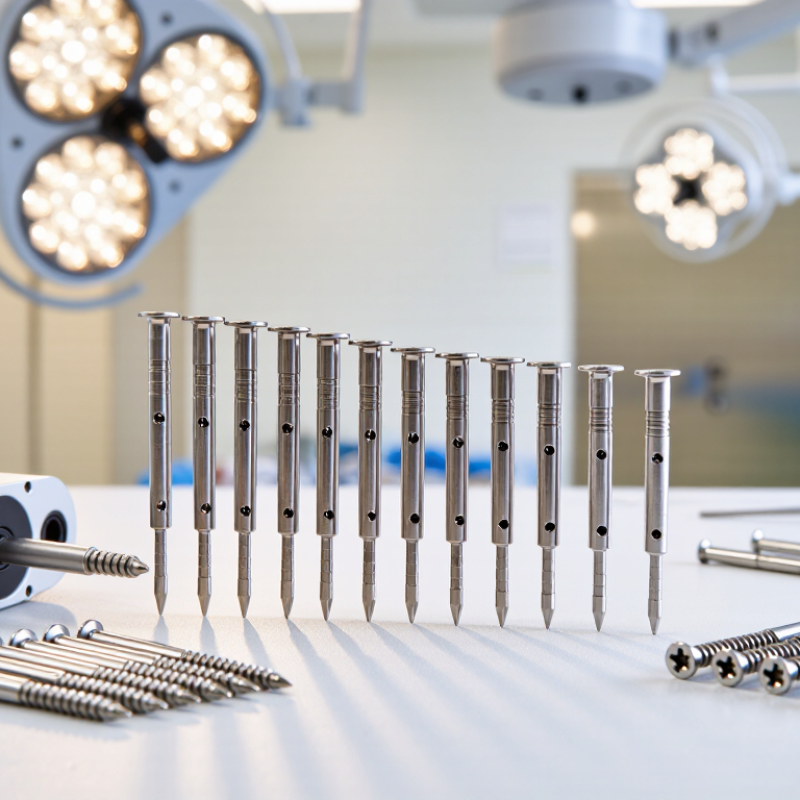
China Top Humerus Interlocking Nails Manufacturer?

What Are Humerus Interlocking Nails and How Are They Used?

Humerus interlocking nails are metal rods placed inside the marrow canal of the upper-arm bone. Locking screws pass through the nail and bone, helping control rotation and shortening. Surgeons may consider them for selected humeral shaft fractures, including some unstable or multiple-fragment breaks. The approach and implant choice depend on fracture pattern, bone quality, and the patient’s condition. A 2006 epidemiological review by Court-Brown and Caesar in Injury reported an annual humeral shaft fracture incidence of about 13 per 100,000 people. That figure describes population frequency, not a reason to choose surgery. A clear X-ray is not the whole outcome; shoulder comfort and arm function matter too.

In practice, the surgeon aligns the broken bone, inserts the nail through an entry point near the shoulder or elbow, then secures it with locking screws. The exact entry route varies. Potential concerns include shoulder irritation, nerve injury, infection, and delayed healing. The patient’s symptoms and follow-up images help guide recovery; the implant alone cannot guarantee union. I may be underweighting comfort when I focus too much on alignment.

Tips: Ask how the entry point may affect shoulder movement, what follow-up imaging is planned, and which symptoms need prompt review. Don’t compare treatment options by implant name alone.

Humerus Interlocking Nails: Typical Surgical Workflow

A humeral interlocking nail is placed inside the bone’s medullary canal and secured with locking screws to help stabilize selected fractures.

The bars show the usual order of key steps, not time, frequency, or patient outcomes: imaging and planning; fracture reduction; nail insertion; proximal and distal locking; and final imaging confirmation. The exact technique depends on the fracture and the patient.

How Are Humerus Interlocking Nails Designed and Manufactured?

Humerus interlocking nails are designed to stabilize fractures while preserving space for healing. Engineers consider the humerus’s curved shape, canal diameter, and nearby nerves. Nail length and diameter options help accommodate different patient anatomies. Proximal and distal locking holes allow screws to control rotation and shortening. Small details matter.

Manufacturing typically combines precision machining with repeated dimensional checks. CNC processes form the nail’s profile and locking holes; inspection verifies alignment, surface finish, and critical dimensions. Implant materials may include titanium alloy meeting ISO 5832-3 requirements. Ekholm et al. reported a humeral-shaft-fracture incidence of about 13 per 100,000 person-years in a Swedish population study (Journal of Bone and Joint Surgery, 2006). That figure is population-specific, not a universal estimate. Fatigue testing and validated cleaning and sterilization processes also support consistent product quality.

Tips: Check screw-hole alignment, material certificates, and test documentation. A polished surface alone proves little. Manufacturers should provide traceable inspection records and explain how design choices address fracture stability. I would still ask how performance is verified across different nail sizes.

What Standards Define a Reliable Chinese Humerus Nail Manufacturer?

China Top Humerus Interlocking Nails Manufacturer?

What Standards Define a Reliable Chinese Humerus Nail Manufacturer?

A reliable manufacturer should show how quality is controlled, not just display certificates. Look for a documented quality management system, such as one aligned with ISO 13485, and risk processes informed by ISO 14971. Confirm that these standards apply to the actual production site and product scope. A certificate alone proves little.

Technical evidence matters. Ask how the manufacturer verifies nail dimensions, hole placement, surface finish, and material composition. Request batch traceability records and inspection criteria. For instruments and implants, packaging and sterilization validation should be clearly documented where applicable. Small details matter. A poorly controlled hole position can complicate screw placement during surgery.

Review design verification, process validation, and complaint-handling procedures, along with evidence supporting the device’s intended use. Check that product registration and labeling meet the requirements of the market where the device will be supplied. Ask for audit records or sample documents, with confidential information appropriately protected. That is not enough. Communication also reveals a lot: can the team answer technical questions directly, or does it rely on vague assurances? No checklist is perfect, and a polished factory tour cannot replace independent evidence. Some answers may take time to verify. That is a reason to ask better questions, not to rush a purchasing decision.

How Can Buyers Compare Chinese Humerus Interlocking Nail Suppliers?

When comparing Chinese humerus interlocking nail suppliers, look beyond price and catalog photos. WHO’s Global Status Report on Road Safety 2023 estimates about 1.19 million road deaths worldwide each year and 20–50 million non-fatal injuries. These figures do not count humeral fractures specifically, but they underline the scale of trauma care needs.

Ask for the nail’s material specifications, dimensions, locking options, and validated mechanical test results. Check that the supplier’s quality-system certificate covers the relevant manufacturing site and product scope. Review applicable registration documents, batch traceability, sterilization records, and packaging details. Ask how the supplier handles complaints and product changes. Clear answers matter.

Request samples for a surgeon-led review of insertion steps, targeting accuracy, and instrument usability. Confirm whether the instrument set is complete, compatible, and consistently available. Compare delivery history and technical support, not just quoted lead times. No checklist is perfect. A polished catalog can still leave unanswered questions, and a low quote may omit important service or documentation costs. Independent verification is worth the extra time.

Which Factors Matter When Selecting a Manufacturer?

Selecting a humerus interlocking nail manufacturer takes more than comparing prices or catalog dimensions. The device must suit the intended surgical workflow and meet defined mechanical requirements. Ask how nail diameter, length, locking-hole position, and instrument compatibility are controlled between batches. Small dimensional differences can complicate alignment in the operating room.

Review the quality system, material specifications, process validation, and inspection records. Request evidence of fatigue and torsional testing, corrosion assessment, and packaging or sterilization validation where applicable. Check that each lot is traceable from raw material to finished-device release. Ask how the manufacturer handles nonconforming products, complaints, and corrective actions. Details matter.

Production capacity is important, but so is responsive technical support. Can the team provide drawings, test summaries, and change notifications promptly? Verify that documentation addresses the requirements in your market rather than relying on a sales statement. Ask clinical and procurement teams about instrument usability, delivery reliability, and training needs. A factory visit or independent audit may reveal gaps a brochure cannot. No supplier is perfect. Ask what went wrong in past production and what changed afterward; a candid answer can be more useful than a polished presentation.

FAQS

What is a humerus interlocking nail?

It is a metal rod placed inside the marrow canal of the upper-arm bone. Locking screws help control rotation and shortening.

How is the nail inserted?

A surgeon aligns the broken bone, inserts the nail near the shoulder or elbow, and secures it with screws. The entry route varies.

Which fractures may be treated with an interlocking nail?

Surgeons may consider one for selected shaft fractures, including unstable breaks or fractures with several fragments. The choice depends on the fracture and patient.

What complications can occur?

Possible concerns include shoulder irritation, nerve injury, infection, and delayed healing. A well-aligned X-ray does not guarantee comfortable movement.

What should patients ask about follow-up?

Ask when follow-up images are planned and which symptoms need prompt review. Also ask how the entry point could affect shoulder movement.

What evidence should a manufacturer provide?

Request quality-system documents, inspection criteria, and batch traceability records. Check that documents match the production site and device.

Which manufacturing details are worth checking?

Ask how nail dimensions, screw-hole positions, surface finish, and material composition are controlled. Small details matter.

What testing and support should buyers review?

Request relevant mechanical test summaries, packaging or sterilization validation, and change-notification procedures. Ask how complaints and production problems are handled.

Can a certificate or factory visit prove reliability?

Neither proves everything. Compare records, audits, and direct answers; a polished tour can still leave gaps. I may be overvaluing paperwork.

Conclusion

Humerus Interlocking Nails are orthopedic implants used to stabilize certain fractures of the upper-arm bone. Their design typically includes a central nail and locking points that help maintain alignment while supporting healing. Manufacturing involves careful material selection, precision machining, surface finishing, inspection, and documentation, with each stage intended to promote consistent quality and dependable performance.

When evaluating Chinese manufacturers, buyers can review applicable quality-management systems, product specifications, testing procedures, traceability, and regulatory documentation for the markets where the implants will be supplied. Comparing suppliers also means examining production capacity, technical support, communication, delivery reliability, and the clarity of product information. No single factor is sufficient on its own: a thorough assessment should consider both manufacturing controls and the supplier’s ability to meet clinical and purchasing requirements. By using consistent evaluation criteria, buyers can make a more informed decision about which manufacturer best fits their needs.

Amelia

Amelia

Amelia is a dedicated marketing professional with a strong understanding of the company’s products, customers, and market environment. Through her practical experience and continuous research, she transforms complex product information into clear, useful, and engaging content that helps readers......
WhatsApp Chat with Siora Surgicals