Knowledge & Insights

Orthopedic Medical Blog

Stay informed with the latest surgical insights, clinical updates, technological advancements, and expert guides from Siora Surgicals.

0%

Choosing Titanium Maxillofacial Plates is a clinical decision, not a simple purchasing task. Facial bones vary greatly in thickness, curvature, and load. A plate that fits one patient may create pressure points in another.

Experienced surgeons usually begin with CT images, fracture location, and the patient’s functional needs. They examine whether the plate can follow the orbital rim, mandible, or midface contour without excessive bending. Small details matter. A sharp edge may irritate soft tissue. A poorly matched screw may weaken fixation.

Material quality also deserves close attention. Medical-grade titanium offers strength, corrosion resistance, and useful imaging compatibility. However, titanium alone does not guarantee a successful result. Plate thickness, hole design, contour, screw compatibility, and manufacturing precision all influence performance. Product documentation should clearly identify the alloy, sterilization method, testing data, and intended clinical use.

There is no universal best plate. That assumption can lead to rushed choices. Surgeons should compare manufacturer evidence, surgical experience, and patient-specific anatomy. Consultation with a maxillofacial specialist remains essential, especially for complex fractures or reconstruction.

Look beyond appearance. A polished surface may seem impressive but reveal little about fatigue resistance or quality control. Reliable suppliers provide traceable records and transparent technical information. Even experienced teams can miss practical concerns, such as instrument access in a narrow surgical field. Careful planning, documented judgment, and realistic expectations support safer selection of Titanium Maxillofacial Plates.
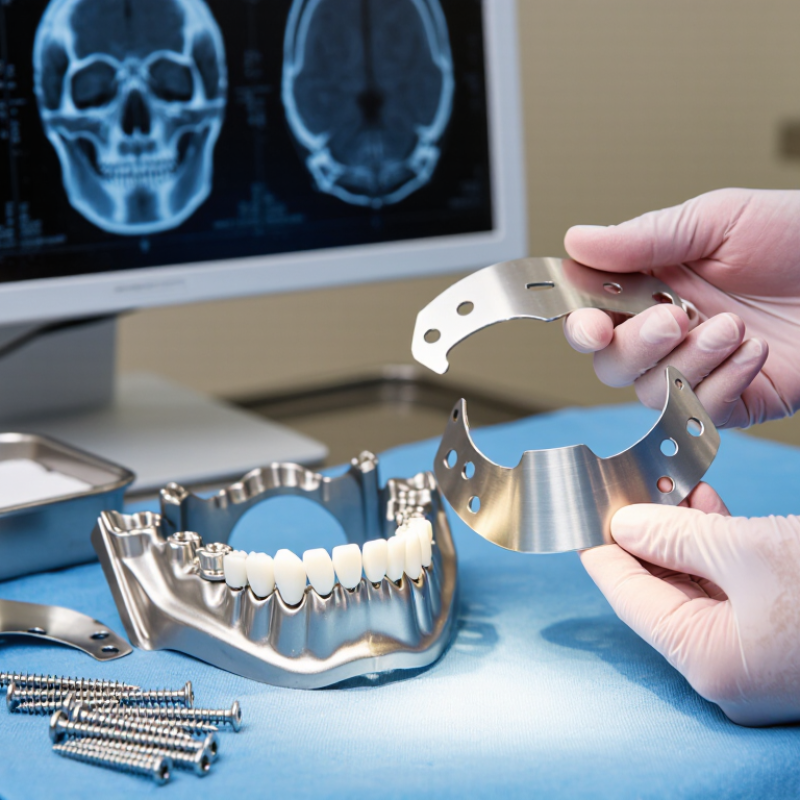
How to Choose Titanium Maxillofacial Plates?

Understanding Titanium Maxillofacial Plates and Their Clinical Roles

How to Choose Titanium Maxillofacial Plates?

Titanium maxillofacial plates provide stable fixation for facial fractures, osteotomies, and reconstructive procedures. Their strength-to-weight ratio supports thin designs around the orbit, zygoma, and mandible. Titanium’s elastic modulus is approximately 105–120 GPa, according to materials science reports. This remains higher than cortical bone, which may increase stress shielding in some cases. Plate thickness must therefore match anatomy, loading, and soft-tissue coverage.

Clinical evidence shows variable complication rates. Published systematic reviews report infection, exposure, or hardware removal rates from about 5% to 30%, depending on fracture complexity and follow-up time. These figures are not interchangeable. A clean orbital fracture differs greatly from a contaminated mandibular injury. AO Surgery Reference emphasizes accurate reduction, stable fixation, and protection of nearby nerves. Imaging quality matters too. Poor contouring can create palpable edges, restricted movement, or malocclusion.

Tips: Review three-dimensional imaging before selecting plate geometry. Check screw length near the orbit and tooth roots. Consider patient bone quality, smoking status, and expected functional load. Avoid choosing the thinnest plate automatically. It may look elegant. Yet, the smallest implant is not always the safest option. A useful clinical habit is documenting why thickness, screw number, and position were selected. That record supports multidisciplinary review and exposes weak assumptions. Evidence guides the decision, but anatomy still decides the final contour.

Assessing Patient Anatomy, Injury Patterns, and Surgical Requirements

How to Choose Titanium Maxillofacial Plates?

Patient anatomy should guide plate selection, not habit. Review thin-slice CT images in multiple planes before surgery. Assess bone thickness, facial asymmetry, dental roots, nerves, and nearby cavities. Pediatric patients require special consideration because growth can change future anatomy. A low-profile plate may suit thin orbital or zygomatic areas. Stronger fixation may be needed along the mandibular body.

Injury patterns also influence design. Simple fractures may need limited fixation and accurate contouring. Comminuted, segmental, or load-bearing fractures require stable support across damaged bone. Check the planned screw paths carefully. Avoid roots, canals, tooth buds, and orbital contents. Surgical requirements matter just as much. Consider exposure, reduction sequence, occlusion, soft-tissue coverage, and the surgeon’s ability to contour the plate safely. A plate that fits a digital model may still feel awkward during real exposure. That limitation deserves honest planning.

Tips: Compare the plate with the patient’s CT-based anatomy. Choose sufficient length for stable fixation. Keep the profile low where soft tissue is thin. Confirm screw length and trajectory before drilling. Follow validated surgical protocols and the device’s instructions for use. Recheck occlusion and facial symmetry before final tightening. Small details matter.

Comparing Plate Designs, Thicknesses, and Titanium Material Options

Choosing titanium maxillofacial plates requires more than matching a plate to a fracture line. A 2024 industry report estimated the global cranio-maxillofacial fixation market at over USD 1 billion, reflecting demand for smaller, anatomically adapted systems. Market growth alone does not prove clinical superiority. Thin plates may reduce palpability around the orbital rim, but they can deform during contouring. Thicker plates offer greater rigidity for load-bearing mandibular areas. A plate that feels strong on the tray may still irritate soft tissue after closure.

Design should follow anatomy, force, and surgical access. Low-profile plates suit the midface and zygomatic region. Reconstruction plates need stronger cross-sections and stable screw purchase. Titanium options also differ. Commercially pure titanium, covered by ASTM F67, offers good corrosion resistance and ductility. Ti-6Al-4V ELI, specified by ASTM F136, generally provides higher strength for demanding fixation. Both require biocompatibility assessment under ISO 10993 principles. Material choice is not a simple ranking. It depends on thickness, alloy condition, bending, and contact with bone.

A 2023 systematic review in the International Journal of Oral and Maxillofacial Surgery reported generally high union rates for titanium fixation, while noting inconsistent complication reporting between studies. That limitation matters. Surgeons should compare plate stiffness, hole geometry, screw diameter, and bending limits—not only alloy names. In practice, a 1.0 mm plate may be appropriate for a delicate orbital contour, while a 2.0 mm system may better resist mandibular forces. These figures are starting points, not universal rules. Patient anatomy often disagrees with the catalogue.

Evaluating Fit, Fixation Methods, Sterilization, and Regulatory Standards

How to Choose Titanium Maxillofacial Plates?

Choosing a titanium maxillofacial plate begins with anatomical fit. Compare the plate with high-resolution CT images and the planned fracture or reconstruction area. A plate should follow the bone contour without excessive bending. Repeated bending may weaken the structure. A perfect digital fit can still feel wrong in the operating room. Surgical judgment remains essential, and it is not always perfect.

Fixation depends on bone quality, defect size, and nearby nerves or teeth. Select screws with suitable diameter and length for stable purchase. Avoid unnecessary penetration into critical anatomical spaces. The fixation pattern should distribute force rather than concentrate it at one hole. Sterilization also requires careful review. Use only validated methods listed in the manufacturer’s instructions. Excessive heat, moisture, or repeated processing may affect packaging, surface condition, or mechanical performance.

Tips: Confirm plate contour before final fixation. Check screw length on imaging. Record lot information for traceability. Review sterilization records, shelf life, and packaging integrity. Regulatory documentation should match the intended anatomical use and local requirements. Look for evidence of quality systems, risk management, biocompatibility evaluation, and validated manufacturing controls. Standards such as ISO 13485 and ISO 14971 may support this review, but they do not replace local regulatory assessment. Real cases vary. Always involve a qualified maxillofacial surgeon and trained medical-device professionals.

How to Choose Titanium Maxillofacial Plates? - Evaluating Fit, Fixation Methods, Sterilization, and Regulatory Standards

Evaluation dimension What to assess Practical selection guidance Safety and verification
Anatomical fit Plate profile, contour, length, thickness, and hole layout relative to the fracture or reconstruction site. Match the plate design to the bone and intended use. A low-profile plate may be useful where soft-tissue coverage is limited; longer plates may provide more fixation points when appropriate. Check that the plate does not obstruct the planned occlusion or impinge on nearby structures. Follow the device instructions for any contouring; repeated or excessive bending can weaken a plate.
Fixation method Plate design, screw type, available hole pattern, and whether the system uses locking or non-locking screws. Select a compatible plate-and-screw system for the site and required stability. Locking constructs can help maintain the relationship between plate and screw; non-locking screws typically draw the plate toward the bone. Use only compatible screws and instruments. Choose screw length and trajectory with regard to bone thickness and nearby teeth, nerves, vessels, sinuses, or other critical anatomy.
Mechanical requirements Expected loading, fracture pattern, bone quality, defect size, and the role of the plate in the overall fixation plan. Choose a construct intended for the relevant anatomical site and clinical application. Plate dimensions and the number and distribution of fixation points should be determined by the treating clinician. Do not assume that a thinner or smaller plate is adequate for every load. Follow the device labeling and established clinical judgment for the particular case.
Material and imaging Material specification, corrosion resistance, mechanical properties, and compatibility with planned imaging or other implants. Implant-grade titanium and titanium alloys are commonly used for bone fixation devices. Confirm the exact material and intended application in the product documentation. Titanium implants are generally compatible with MRI under specified conditions, but the exact device labeling must be checked. Metal can also create imaging artifacts.
Sterilization and packaging Whether the device is supplied sterile or non-sterile, packaging integrity, and validated reprocessing instructions if applicable. Use sterile devices according to their labeling. For devices supplied non-sterile or intended for reuse, follow the manufacturer-validated cleaning, inspection, packaging, and sterilization cycle. Do not select a sterilization method or cycle based on material alone. Check the instructions for use, cycle parameters, device compatibility, and local sterile-processing requirements.
Regulatory and quality documentation Market authorization, intended-use labeling, traceability, risk-management documentation, and applicable quality-system requirements. Verify authorization for the intended market and clinical use. Relevant frameworks may include ISO 13485 for quality management, ISO 14971 for medical-device risk management, and applicable national device regulations. Regulatory classification and evidence requirements depend on jurisdiction, device design, and intended use. Confirm current requirements with the relevant regulator and the device’s official documentation.
Instrument and system compatibility Compatibility between the plate, screws, drill guides, drivers, and any required bending instruments. Choose a complete, compatible system and verify that the required instruments and screw sizes are available before the procedure. Mixing components from different systems may result in poor fit or inadequate function. Follow the manufacturer’s compatibility information and instructions for use.

Note: This table is for general educational purposes and does not replace professional clinical judgment, device labeling, or applicable regulatory requirements.

Balancing Surgical Performance, Safety, Cost, and Long-Term Outcomes

Choosing titanium maxillofacial plates requires more than checking alloy and price. The plate must match the fracture pattern, bone thickness, and surgical approach. Review CT images with a qualified maxillofacial surgeon. A curved plate may reduce bending during surgery, while low-profile edges can limit soft-tissue irritation. Measure screw length carefully. A few millimeters matter near the orbit, nerves, and dental roots.

Safety depends on documented material quality, fatigue testing, corrosion resistance, and sterile packaging. Ask for traceability and clear instructions for storage, sterilization, and implantation. Titanium is generally well tolerated, but patient history still matters. Previous metal sensitivity, infection risk, poor bone quality, and planned radiotherapy may change the decision. Compatibility with imaging and other implants also deserves review. Do not rely on a catalog photograph. Fit should be verified against the actual anatomy.

Cost should include instruments, operating time, revision risk, and follow-up care. A cheaper plate may demand more contouring or create avoidable delays. Long-term outcomes depend on stable fixation, accurate reduction, healing, and patient factors. No selection is perfect. In practice, teams sometimes prioritize a low initial price and underestimate handling time. That mistake is worth challenging. Compare technical evidence, surgeon experience, supplier support, and post-market safety records before approval. Document why the chosen design fits this patient, not merely why it fits the budget.

FAQS

What are titanium maxillofacial plates used for?

They stabilize facial fractures, bone cuts, and reconstructive procedures. Common areas include the orbit, cheekbone, and lower jaw.

How should plate thickness be selected?

Match thickness to anatomy, bone quality, loading, and soft-tissue coverage. Thin plates suit delicate contours. Stronger plates may suit the lower jaw.

Is the thinnest plate always the best choice?

No. A thin plate may feel elegant but can deform or fail under higher loads. Smaller is not always safer.

What problems can poor plate contouring cause?

Poor contouring may create palpable edges, restricted movement, or an altered bite. The plate should follow the bone closely.

How do plate designs differ by facial region?

Low-profile plates often suit the midface and cheekbone. Reconstruction plates usually need stronger sections and reliable screw purchase.

What should be checked before selecting screws?

Review three-dimensional imaging, nearby nerves, tooth roots, and critical spaces. Screw length should provide stable purchase without unnecessary penetration.

How reliable are published complication rates?

Reported infection, exposure, or removal rates range from about 5% to 30%. These figures vary with injury complexity and follow-up time.

What should be reviewed before sterilization and clinical use?

Follow validated processing instructions and inspect packaging, shelf life, and surface condition. Record lot details. Small omissions can matter.

Do material standards replace clinical judgment?

No. Quality and biocompatibility documentation support review, but anatomy and surgical conditions still guide the final decision.

Can digital planning guarantee a perfect plate fit?

No. Imaging improves planning, but the operating room may reveal unexpected bone shape or access limits. Digital accuracy is helpful, not absolute.

Conclusion

Choosing Titanium Maxillofacial Plates requires a careful balance between clinical needs, material performance, and long-term patient outcomes. These plates play an important role in stabilizing facial fractures, reconstructing damaged bone, and supporting healing while preserving facial structure and function. Selection should begin with a detailed assessment of the patient’s anatomy, injury pattern, bone quality, and surgical objectives. The complexity and location of the defect will influence the required plate shape, thickness, flexibility, and overall design.

Surgeons should also evaluate how easily the plate can be contoured, positioned, and secured with appropriate fixation methods. Titanium options should be considered for their strength, biocompatibility, corrosion resistance, and compatibility with imaging and sterilization procedures. Reliable manufacturing quality, regulatory compliance, and validated sterilization are essential for patient safety. Ultimately, the best Titanium Maxillofacial Plates should provide secure fixation, efficient surgical handling, and predictable healing while balancing cost, durability, and the patient’s long-term functional and aesthetic needs.

Amelia

Amelia

Amelia is a dedicated marketing professional with a strong understanding of the company’s products, customers, and market environment. Through her practical experience and continuous research, she transforms complex product information into clear, useful, and engaging content that helps readers......
WhatsApp Chat with Siora Surgicals