Knowledge & Insights

Orthopedic Medical Blog

Stay informed with the latest surgical insights, clinical updates, technological advancements, and expert guides from Siora Surgicals.

0%

Bipolar Hip Prosthesis selection is becoming more important as ageing populations increase demand for dependable hip-fracture care. The World Health Organization identifies hip fractures as a major global disability concern, while the International Osteoporosis Foundation projects millions of additional fragility fractures by 2050. These trends create pressure for hospitals, distributors, and surgeons to evaluate manufacturers carefully.

This guide examines leading Bipolar Hip Prosthesis manufacturers for global buyers. It considers implant design, bearing materials, femoral stem geometry, quality certifications, clinical evidence, and supply reliability. The AAOS Clinical Practice Guideline supports either unipolar or bipolar hemiarthroplasty for selected older patients, showing that patient factors still matter more than marketing claims. Details matter. A polished catalogue cannot replace evidence.

Dr. Robert W. Bateman, widely associated with the development of bipolar hip arthroplasty, emphasized the value of combining inner and outer movement within the implant design. His concept aimed to reduce acetabular stress while maintaining useful hip motion. That principle remains relevant, although modern outcomes depend on surgical technique, patient anatomy, activity level, and implant quality. Fortune Business Insights and Grand View Research both report continued growth in the broader hip replacement market, but their figures include several implant categories. They should not be treated as direct Bipolar Hip Prosthesis sales data. No ranking is perfect. Buyers must verify regulatory status, published clinical results, manufacturing audits, and after-sales support before choosing a supplier.
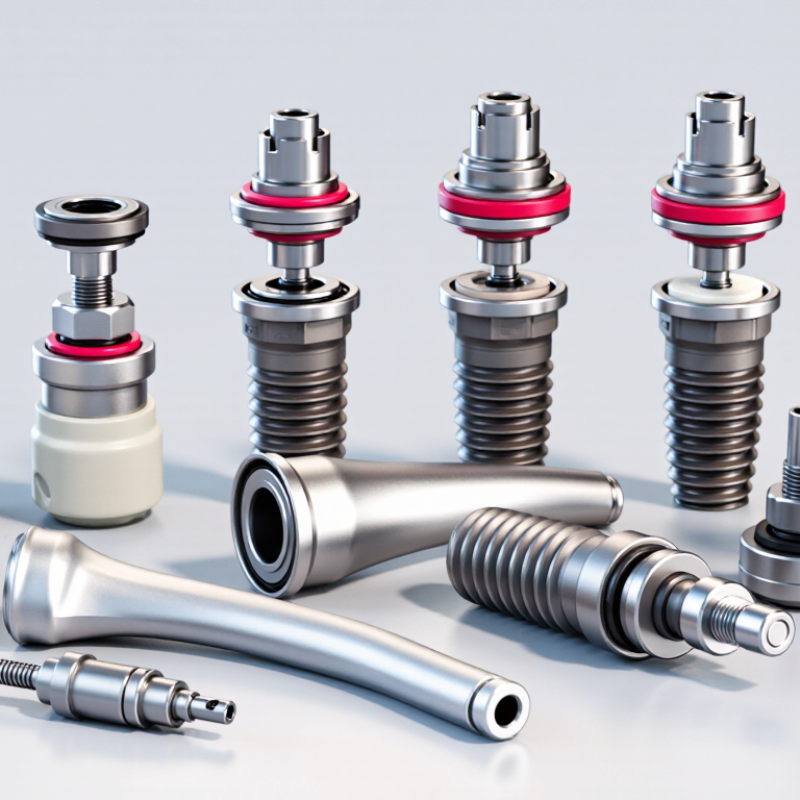
Top Bipolar Hip Prosthesis Manufacturers for Global Buyers

What Is a Bipolar Hip Prosthesis and How Does It Work?

A bipolar hip prosthesis is a partial hip replacement designed to replace the damaged femoral head and neck. It usually has a metal stem, a femoral head, and an outer cup-like shell. Unlike a unipolar design, it contains two moving surfaces. The inner head moves inside the outer shell, while the shell moves against the patient’s natural acetabulum.

This dual articulation can distribute movement across two interfaces. During walking, the inner bearing allows controlled rotation, while the outer surface follows the socket. The design may reduce direct friction against the acetabular cartilage, although results vary with patient age, activity, bone quality, and surgical technique. It is commonly considered for selected femoral neck fractures when the acetabulum remains reasonably healthy.

Fit matters greatly. A surgeon assesses leg length, femoral anatomy, socket condition, and soft-tissue stability before selecting dimensions. For global buyers, reliable prostheses should have traceable materials, validated manufacturing processes, clear sizing data, and regulatory documentation for the target market. Clinical evidence should support claims about wear, stability, and revision rates.

It is not a perfect solution. Some patients may develop acetabular erosion, dislocation, infection, or persistent pain. The outer shell can also lose its intended movement over time. Device choice should therefore follow patient-specific imaging and experienced orthopedic judgment, not catalog specifications alone. Even a well-designed implant can perform poorly when alignment or rehabilitation is inadequate.

Key Materials and Design Features of Bipolar Hip Prostheses

Top Bipolar Hip Prosthesis Manufacturers for Global Buyers

Key Materials and Design Features of Bipolar Hip Prostheses

Bipolar hip prostheses use two moving surfaces. The femoral head moves inside a polyethylene liner, while the outer shell moves against the acetabulum. This dual-motion design can reduce direct acetabular stress during early movement. It is often considered for older patients with femoral neck fractures.

Common stems use titanium alloys or cobalt-chromium alloys. Titanium is lighter and supports bone integration in many uncemented designs. Cobalt-chromium offers high strength and wear resistance. The bearing liner usually uses ultra-high-molecular-weight polyethylene. Highly cross-linked polyethylene may improve wear performance, but manufacturing quality remains critical. Small defects matter.

The World Health Organization reports about 684,000 fatal falls globally each year, with adults over 60 facing the greatest risk. This highlights the need for stable implants and reliable fixation. The National Joint Registry’s annual reports also show that implant outcomes depend on patient age, fixation method, surgical indication, and implant design—not material alone. The trade-off is easy to miss. A polished stem may support cemented fixation, while a porous surface may encourage bone ingrowth. Neither option is universally superior. Global buyers should review ISO 7206 testing, fatigue data, liner thickness, shell geometry, and verified clinical follow-up. Supplier documentation can look complete, yet long-term evidence may still be limited.

How to Evaluate Bipolar Hip Prosthesis Manufacturers

Top Bipolar Hip Prosthesis Manufacturers for Global Buyers

How to Evaluate Bipolar Hip Prosthesis Manufacturers

Evaluating a bipolar hip prosthesis manufacturer requires more than comparing catalog prices. Check its quality system, regulatory history, and production records. ISO 13485 certification is useful, but certification alone does not prove consistent performance. Request recent audit findings, corrective action records, and evidence of traceability for every production batch.

Inspect the implant materials and surface finishes carefully. Ask for test data covering fatigue strength, wear resistance, corrosion behavior, and dimensional accuracy. The shell, liner, stem, and locking features should match approved technical specifications. Review sterilization validation, packaging integrity, and shelf-life studies. A reliable manufacturer can explain what happens when a batch fails inspection. Vague answers matter.

Clinical evidence deserves equal attention. Look for peer-reviewed studies, post-market surveillance, and documented complaint handling. Check whether the manufacturer supports surgeon training and provides clear surgical instruments and instructions. Delivery performance also matters. Compare production capacity, lead times, inventory controls, and contingency plans for raw-material shortages. A polished catalog can still hide weak evidence. Missing documents should be treated as findings, not small gaps. No supplier will score perfectly. That is normal. However, unexplained changes in materials, testing methods, or subcontractors should slow the purchasing decision. Ask for a site audit when feasible, even if the facility appears modern. Photos are not proof. Speak with technical staff, not only sales representatives, and record every answer for later comparison.

Leading Manufacturing Regions and Global Supplier Capabilities

Top Bipolar Hip Prosthesis Manufacturers for Global Buyers

Leading Manufacturing Regions and Global Supplier Capabilities

Manufacturing strength is increasingly regional. North America and Western Europe remain important for advanced hip implant engineering, clinical validation, and regulatory documentation. According to Grand View Research, the global orthopedic devices market was valued at over USD 50 billion in 2023, with joint reconstruction representing a substantial segment. Demand is supported by aging populations and rising orthopedic procedures.

Asia-Pacific is expanding quickly. China, India, South Korea, and Southeast Asia offer competitive machining, casting, coating, and sterile packaging capabilities. MarketsandMarkets has identified Asia-Pacific as one of the fastest-growing orthopedic device regions, driven by healthcare investment and hospital expansion. However, lower production costs do not automatically prove consistent quality.

Look closely.

Reliable bipolar hip prosthesis suppliers usually operate under ISO 13485 quality systems. They should provide material certificates, dimensional inspection records, sterilization validation, and traceability from raw material to shipment. Titanium alloys, cobalt-chromium alloys, and ultra-high-molecular-weight polyethylene require different testing controls. The International Organization for Standardization also publishes standards covering hip joint prostheses, including fatigue and wear evaluation.

Supplier capability varies within every region. Some factories maintain robotic machining and in-house testing laboratories, while others outsource critical processes. That distinction matters. Global buyers should review audit findings, clinical evidence, complaint histories, and supply continuity before comparing prices. A polished catalog can still hide weak documentation. Industry reports offer useful market direction, but factory-level verification remains essential.

Top Bipolar Hip Prosthesis Manufacturers for Global Buyers - Leading Manufacturing Regions and Global Supplier Capabilities

Regional comparison of bipolar hip prosthesis manufacturing capabilities for international procurement
Manufacturing Region Common Product Scope Typical Materials and Components Manufacturing Capabilities Quality and Regulatory Strengths Global Buyer Considerations
United States and Canada Bipolar femoral heads, femoral stems, acetabular components, modular systems, and revision-compatible components. Titanium alloys, cobalt-chromium alloys, stainless steel where specified, ultra-high-molecular-weight polyethylene, and selected ceramic components. Precision CNC machining, forging, investment casting, porous or textured surfaces, laser marking, cleaning, packaging, and validated sterilization arrangements. Strong documentation practices, established design-control procedures, biocompatibility evaluation, and experience with FDA and Health Canada submissions. Suitable for buyers requiring detailed technical files, traceability, formal change control, and North American market support. Device classification and submission route must be confirmed for each design.
Western Europe Primary and revision hip components, bipolar heads, femoral stems, modular necks, and instruments for orthopedic procedures. Titanium and cobalt-chromium alloys, UHMWPE, ceramic materials, and surface-treated metallic components. High-precision machining, forging, additive manufacturing for selected components, porous coatings, dimensional inspection, and cleanroom-controlled packaging. Broad use of ISO 13485 quality systems, risk management under ISO 14971, biological evaluation under ISO 10993, and conformity assessment under the EU Medical Device Regulation where applicable. Strong option for buyers seeking mature European documentation and multi-market technical support. Availability of EU market access depends on current conformity-assessment status.
China Bipolar hip prostheses, femoral stems, modular heads, acetabular components, surgical instruments, and private-label orthopedic products. Titanium alloys, cobalt-chromium alloys, stainless steel, UHMWPE, and ceramic options depending on the product line. Large-scale forging and machining, investment casting, CNC finishing, surface texturing, coating, automated inspection, and contract manufacturing. Manufacturers may support NMPA registration, ISO 13485 systems, export documentation, and selected overseas regulatory submissions; capability varies considerably by facility. Often attractive for volume purchasing and OEM or private-label programs. Buyers should independently verify sterilization validation, material certificates, clinical evidence, audit history, and regulatory authorization.
Japan and South Korea Precision hip implants, bipolar heads, femoral stems, ceramic or metal bearing components, and procedure-specific instrumentation. Titanium alloys, cobalt-chromium alloys, alumina or zirconia-toughened ceramic materials, and UHMWPE. High-precision machining, fine surface finishing, ceramic processing, dimensional metrology, cleanliness control, and controlled assembly. Strong engineering and process-control culture, with regulatory pathways involving Japan’s PMDA or Korea’s MFDS in addition to international quality-system requirements. Well suited to buyers prioritizing tight tolerances and advanced materials. Export projects may require localized labeling, language support, and market-specific clinical or equivalence documentation.
India Bipolar hip systems, femoral components, modular heads, trauma-related orthopedic products, and surgical instruments. Titanium alloys, cobalt-chromium alloys, stainless steel, UHMWPE, and selected ceramic or coated components. CNC machining, forging, casting, polishing, surface finishing, packaging, and OEM production; process maturity should be assessed facility by facility. Potential support for India’s CDSCO requirements, ISO 13485 quality systems, and export documentation. Third-party certification scope and product registration should be verified directly. Can provide competitive sourcing and customization. Buyers should place particular emphasis on process validation, incoming-material controls, batch traceability, and long-term supply continuity.
Southeast Asia Contract-manufactured orthopedic components, machined metal parts, instruments, packaging, and selected finished implant systems. Titanium alloys, cobalt-chromium alloys, stainless steel, UHMWPE, and other materials specified by the validated design. Machining, finishing, assembly, packaging, supplier integration, and export-oriented contract manufacturing; finished-device capability differs by country and plant. Some facilities operate under ISO 13485 and support international customer audits, while regulatory maturity and product-registration experience vary across jurisdictions. Useful for supply-chain diversification and component sourcing. Buyers should confirm whether the facility is the legal manufacturer, contract manufacturer, or only a machining supplier.
Global Qualification Benchmarks Applicable bipolar hip design, compatible instrumentation, packaging configuration, and intended-use documentation. Verified implant-grade materials with supplier certificates, heat or lot traceability, and documented material specifications. Dimensional inspection, fatigue and wear testing where applicable, cleanliness testing, validated processes, controlled environments, and documented nonconformance procedures. ISO 13485, ISO 14971, ISO 10993, relevant ISO 7206 hip-prosthesis test methods, applicable ASTM methods, sterilization validation, and post-market surveillance processes. Before purchase, request certificates, technical drawings, regulatory registrations, audit reports, sample inspection results, shelf-life data, recall procedures, minimum order quantities, and lead-time commitments.

Note: Capabilities and regulatory status differ among facilities within each region. Buyers should verify current certifications, product registrations, testing records, and manufacturing scope directly before qualification or purchase.

What Global Buyers Should Check Before Placing an Order

Top Bipolar Hip Prosthesis Manufacturers for Global Buyers

What Global Buyers Should Check Before Placing an Order

Global buyers should evaluate bipolar hip prostheses beyond unit price. The World Health Organization reports that musculoskeletal conditions affect about 1.71 billion people worldwide. This demand increases pressure on suppliers, but volume alone proves little. Ask for implant design drawings, material certificates, sterilization records, and traceability from raw material to shipment. Short documents are better.

Check whether the manufacturer operates under ISO 13485 and maintains current regulatory approvals for your destination market. An ISO certificate is useful, but it is not clinical proof. Review published performance data, revision rates, complaint histories, and adverse-event reporting. The UK National Joint Registry’s 21st Annual Report (2024) contains information from more than three million joint replacement procedures. Buyers can use registry evidence to question optimistic supplier claims.

The femoral head, bipolar shell, taper, and stem must be mechanically compatible. Confirm dimensions, bearing materials, fatigue testing, corrosion testing, and sterilization validation. Packaging should show the lot number, expiry date, storage conditions, and unique device identification where required. Request samples for visual inspection and surgical handling. Small details matter.

Supply reliability also deserves a hard test. Review production capacity, backup suppliers, lead times, and recall procedures. OECD Health at a Glance 2023 shows substantial international variation in hip replacement activity, so local clinical practice may affect product selection. That point is easy to overlook. I would still verify every reported result independently, because supplier brochures often present favorable data without enough follow-up time.

Top Bipolar Hip Prosthesis Manufacturers for Global Buyers - What Global Buyers Should Check Before Placing an Order

The chart presents the buyer-side evidence checks that should be completed before ordering. Verification should cover the applicable quality-management, risk-management, biocompatibility, mechanical-performance, sterilization, packaging, traceability, and destination-market regulatory requirements. The 100% target means that the relevant evidence for each category should be obtained and reviewed before purchase; it is not a ranking of manufacturers.

Relevant international references may include ISO 13485, ISO 14971, ISO 10993, ISO 7206, ISO 11135 or ISO 11137 where applicable, and ISO 11607.

FAQS

What should buyers review before choosing a bipolar hip prosthesis manufacturer?

Review quality systems, regulatory history, production records, and batch traceability. Ask for recent audit findings and corrective action records. Catalog prices are not enough.

Does ISO 13485 certification prove reliable product performance?

No. It shows a quality management framework, not complete clinical performance. Request testing data, complaint records, and post-market surveillance. Certification is only one piece.

Which implant materials and tests require close attention?

Check the shell, liner, stem, femoral head, taper, and locking features. Request fatigue, wear, corrosion, and dimensional accuracy results. Material certificates should match approved specifications.

How can buyers assess sterilization and packaging quality?

Review sterilization validation, packaging integrity, and shelf-life studies. Packaging should show lot numbers, expiry dates, and storage conditions. Inspect sample packs for damaged seals.

What clinical evidence should manufacturers provide?

Look for peer-reviewed studies, revision data, complaint histories, and adverse-event reports. Check how long patients were followed. Short follow-up can mislead.

How important are surgical instruments and training support?

Manufacturers should provide clear instructions, compatible instruments, and practical surgeon training. Ask technical staff specific handling questions. Sales materials are not enough.

How should buyers evaluate supply reliability?

Compare production capacity, lead times, inventory controls, and backup suppliers. Review raw-material shortage plans and recall procedures. Delivery promises need evidence.

When should a buyer request a factory audit?

Request an audit when documents are incomplete or production changes seem unexplained. Check material changes, testing methods, and subcontractors. Modern photos prove very little.

What warning signs deserve extra attention?

Vague answers, missing documents, and unexplained specification changes are serious findings. Do not dismiss them as small gaps. No supplier is perfect.

How can buyers avoid relying too heavily on supplier claims?

Compare brochures with independent studies, registry data, and technical records. Record every answer for later comparison. I would still verify favorable claims independently.

Conclusion

A Bipolar Hip Prosthesis is a partial hip replacement device designed to restore movement when the femoral head is damaged but the natural acetabulum remains suitable for use. Its dual-bearing structure allows movement between the prosthetic head and an internal liner, while also supporting rotation against the patient’s hip socket. This design can help improve stability, mobility, and load distribution when selected for appropriate clinical situations. Common materials include medical-grade metals, durable polymers, and ceramic components, with design priorities such as strength, wear resistance, biocompatibility, and accurate sizing.

When evaluating Bipolar Hip Prosthesis manufacturers, global buyers should review material quality, engineering capabilities, production consistency, quality management systems, testing procedures, regulatory documentation, and after-sales support. Manufacturing regions may offer different advantages in technology, capacity, customization, and supply-chain reliability. Before placing an order, buyers should confirm product specifications, certifications, traceability, packaging, delivery schedules, minimum order quantities, and communication procedures. A thorough comparison of technical performance, supplier reliability, and total purchasing cost can support safer and more effective sourcing decisions.

Charlotte

Charlotte

Charlotte is a professional marketing specialist dedicated to helping businesses understand practical solutions, emerging market trends, and the value of reliable products and services. With a strong knowledge of the company’s offerings, she translates complex product features into clear, useful......
WhatsApp Chat with Siora Surgicals