Stay informed with the latest surgical insights, clinical updates, technological advancements, and expert guides from Siora Surgicals.
Global buyers increasingly consider Sports Medicine Implants when hospitals need dependable solutions for ligament, tendon, cartilage, and bone procedures. These products can support stable fixation, controlled recovery, and more consistent surgical workflows. However, choosing an implant is not simply a price comparison. It requires evidence, careful evaluation, and a clear understanding of local clinical needs.
Experienced buyers examine material quality, implant design, sterilization methods, and manufacturing controls. They may request test reports, traceability records, biocompatibility data, and evidence from relevant clinical use. Certifications also matter, but their meaning depends on the destination market. A CE mark, FDA authorization, or ISO 13485 certification should be checked through reliable documentation. Not every certificate proves equal performance.
Supply reliability is equally important. A delayed shipment can affect an operating schedule, especially when surgeons expect specific sizes or instrument sets. Buyers should review packaging strength, storage conditions, shelf life, and after-sales support. Clear communication helps resolve problems across languages and time zones.
Still, no supplier is perfect. Even a reputable manufacturer may have limited data for a specific procedure or patient group. This point deserves honest discussion. Global purchasers should compare clinical evidence, regulatory status, surgeon feedback, and total ownership costs. They should also confirm whether training and technical assistance are available after delivery. A thoughtful decision protects patients, supports surgeons, and builds a more reliable international medical supply chain.
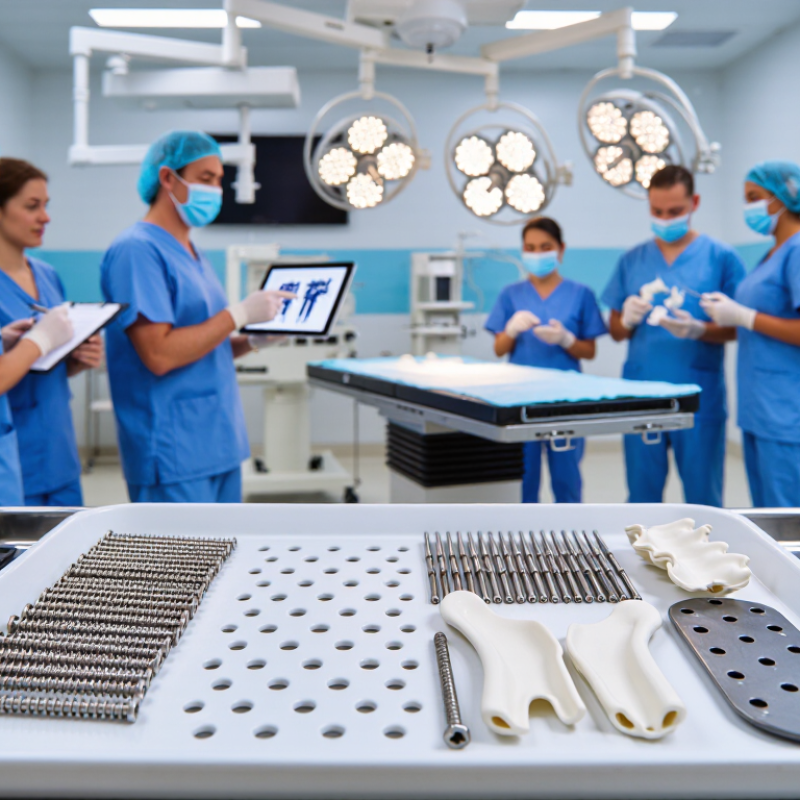
Sports medicine implants are medical devices used to repair, stabilize, or replace damaged structures around joints. They may include suture anchors, interference screws, fixation buttons, plates, and small metal or bioabsorbable implants. Their design supports tissue healing while helping restore normal movement.
These implants commonly treat anterior cruciate ligament tears in the knee. They also support meniscus repair, rotator cuff fixation, shoulder labral injuries, and selected cartilage or tendon problems. For example, an anchor can secure a torn tendon to bone, while a screw can hold a reconstructed ligament in place. Treatment depends on the injury, tissue quality, activity level, and the patient’s overall health.
Qualified orthopedic surgeons review imaging, physical findings, and surgical goals before choosing an implant. Material strength, absorption rate, compatibility, and sterilization quality also matter. Global buyers should request clear technical files, traceability records, and evidence of regulatory compliance in the target market. A lower purchase price may not reflect the full clinical cost.
The choice is not always obvious. Some absorbable materials can cause temporary irritation or cyst formation. Metal devices may offer dependable strength, but they can complicate later imaging or revision surgery. Even experienced teams may reassess their preferences after reviewing new evidence. Careful training and follow-up remain essential.
Sports medicine implants come in several forms because injuries differ in location, tissue quality, and expected loading.
Suture anchors secure torn tendons or ligaments to bone, often around the shoulder, hip, or ankle.
Interference screws hold grafts inside bone tunnels during ligament reconstruction, especially in knee procedures.
Small fixation screws can stabilize fractures or reinforce repaired bone.
Each choice has a specific purpose.
Plates and small screws support fractures when controlled alignment matters during movement and rehabilitation. Intramedullary nails sit inside long bones and manage selected fractures with limited exposure. Cartilage repair may use scaffold implants designed to support tissue development in damaged joints.
Some devices use titanium or stainless steel. Others use PEEK or bioabsorbable polymers. Material selection depends on strength, imaging needs, allergy history, and removal plans.
Joint replacement components form another category when severe damage affects normal joint surfaces. They may replace the femoral head, socket, or other worn areas.
Surgeons review imaging, activity goals, bone quality, and infection risk before choosing an implant. Hospitals should verify intended use, traceability, sterilization records, and regulatory authorization for their market.
No implant is perfect. Healing can fail despite technically sound placement. That reality requires honest counseling, careful follow-up, and patient-specific rehabilitation. Evidence changes, too, so decisions should reflect current clinical guidance and documented outcomes.
Sports medicine implants can support recovery by restoring stability where damaged tissue no longer performs reliably. The World Health Organization estimates that 1.71 billion people live with musculoskeletal conditions worldwide (WHO, 2022). For these patients, accurate fixation may reduce unwanted movement and help rehabilitation begin with greater confidence. Small anchors, interference screws, and fixation systems can hold reconstructed ligaments or tendons while biological healing develops.
Precision begins before the operation. Three-dimensional imaging can reveal bone shape, tunnel position, and joint alignment. During surgery, calibrated guides help surgeons reproduce planned angles and depths. This matters in narrow spaces, where a few millimeters can affect graft tension or joint movement. The American Academy of Orthopaedic Surgeons reports that patient outcomes depend on implant selection, surgical technique, and appropriate postoperative care (AAOS, 2023). Technology helps, but it does not replace judgment.
A neat implant cannot rescue poor rehabilitation. Recovery remains individual. Global buyers should examine regulatory clearance, material testing, sterilization records, traceability, and published clinical evidence. The Australian Orthopaedic Association National Joint Replacement Registry shows why long-term monitoring matters, with revision risk varying by implant design, patient factors, and procedure type (AOANJRR, 2024). Evidence is not perfect. Some sports implant studies involve small groups or short follow-up periods, so purchasing decisions should remain cautious, transparent, and clinically guided.
Why Choose Sports Medicine Implants for Global Buyers?
Global buyers should evaluate safety before comparing price. The World Health Organization reports that 1.71 billion people live with musculoskeletal conditions worldwide. This demand increases the need for reliable sports medicine implants and transparent evidence.
Check whether the manufacturer operates under ISO 13485 quality management controls. Review ISO 10993 biocompatibility testing, fatigue data, wear results, and sterilization validation. Material specifications should match relevant ASTM or ISO standards. Ask for batch records, Unique Device Identification, and complaint-history data. The OECD’s Health at a Glance 2023 shows wide differences in joint replacement use between countries. Therefore, local surgical practice and patient profiles matter. A result from one market may not transfer perfectly. That limitation deserves attention.
Tips: Request certificates with their exact scope and expiry dates. Verify test laboratories and review raw summaries, not only brochures. Examine post-market surveillance, recall procedures, and revision rates. The UK National Joint Registry demonstrates the value of long-term procedure tracking. Short-term strength is not enough. No checklist catches every failure. Even excellent documentation can miss problems caused by training, storage, or surgical technique. Buyers should assess supplier support, surgeon education, packaging integrity, and transport controls together. A cheaper implant can become expensive when traceability is weak.
Global buyers should compare sports medicine implant suppliers through evidence, not attractive brochures. The World Health Organization reports that 1.71 billion people live with musculoskeletal conditions. This demand makes supplier reliability increasingly important. Review ISO 13485 certification, regulatory registrations, sterilization records, and batch-level traceability. Ask for clinical evidence, not only laboratory test results. A supplier should explain material grades, implant dimensions, packaging controls, and expected shelf life clearly. If answers remain vague, pause the purchase.
Cost comparison requires more than checking the unit price. Add shipping, import duties, inspection, training, inventory losses, and possible revision procedures. Grand View Research identifies continued growth in the global sports medicine market through 2030, but market growth does not guarantee quality. Request a transparent quotation with minimum order quantities and replacement terms. Compare delivery consistency over at least six months. One low quote may hide unstable production. That lesson is easy to overlook.
Tips: Build a scorecard covering compliance, clinical documentation, lead time, complaint response, and total landed cost. Ask how quickly the supplier investigates a damaged package or suspected defect. Confirm whether technical training includes surgical handling and storage conditions. Obtain written after-sales service levels, including response times and replacement procedures. Speak with verified hospital users where possible. Do not rely on one reference. Supplier reviews can become outdated, and even strong documentation cannot replace independent clinical judgment.
They can stabilize repaired ligaments, tendons, or other damaged tissues. Small anchors and screws may limit unwanted movement. Healing still takes time.
A few millimeters can change graft tension, joint movement, or fixation strength. Three-dimensional imaging helps reveal bone shape and tunnel position. Guides can support consistent angles and depths.
No. An implant supports repair, but rehabilitation remains essential. Recovery depends on the injury, procedure, patient, and follow-up care. A neat implant cannot rescue poor rehabilitation.
Request quality-system certificates, material specifications, biocompatibility results, fatigue data, and sterilization records. Check each certificate’s scope and expiry date. Do not trust brochures alone.
Ask for batch records, unique device identification, complaint histories, and recall procedures. Packaging should remain intact during storage and transport. Weak traceability can make a low price expensive.
Include shipping, duties, inspections, training, inventory losses, and replacement costs. Review delivery consistency over several months. One cheap quote may hide unstable production.
Confirm response times for damaged packages, suspected defects, and replacement requests. Ask whether training covers handling, storage, and surgical use. Written service terms are safer.
Not always. Some studies use small groups or short follow-up periods. Review clinical evidence alongside testing, revision data, and post-market monitoring. Evidence has limits.
Sports Medicine Implants are specialized medical devices designed to support the repair and stabilization of bones, joints, ligaments, tendons, and related soft tissues affected by sports injuries or degenerative conditions. Available options may include fixation screws, anchors, plates, interference devices, joint reconstruction components, and other surgical implants. Their selection depends on the injury, anatomy, surgical technique, and expected activity level. By providing secure fixation and restoring structural alignment, these implants can help surgeons perform precise procedures and support a predictable recovery process when combined with appropriate rehabilitation.
For global buyers, quality and safety should be evaluated through material traceability, manufacturing consistency, sterilization controls, biocompatibility testing, regulatory documentation, and clearly defined quality-management procedures. Buyers should also compare suppliers based on product specifications, clinical and technical support, lead times, total costs, customization capabilities, warranty terms, training, and after-sales service. A reliable purchasing decision balances performance, compliance, supply stability, and long-term cooperation rather than focusing on price alone.