Knowledge & Insights

Orthopedic Medical Blog

Stay informed with the latest surgical insights, clinical updates, technological advancements, and expert guides from Siora Surgicals.

0%

Choosing Ilizarov External Fixators is not just a matter of comparing prices or counting rings. The frame must suit the patient’s anatomy, the treatment goal, and the clinical team’s experience. Gavriil Ilizarov, the method’s originator, is often credited with the words, “The possibilities of medicine are endless.” That optimism matters, but careful planning matters more.

A practical buying review should examine the frame’s materials, adjustment range, pin and wire options, and compatibility between components. Ask how clearly the supplier documents dimensions, load limits, sterilization instructions, and replacement-part availability. A small mismatch between a ring size and the limb can complicate assembly. So can vague instructions. These details may look minor in a catalog. They are not minor in a treatment room.

This guide introduces seven checks for evaluating Ilizarov External Fixators before purchase. It also considers supplier support, staff training, quality documentation, and the demands of the intended clinical setting. Specifications alone cannot establish suitability; qualified clinicians must assess the patient and confirm the configuration. And there is no universal best frame. Some purchasing decisions remain uncertain until the team compares real needs with available evidence. That deserves honest review, not a rushed promise.
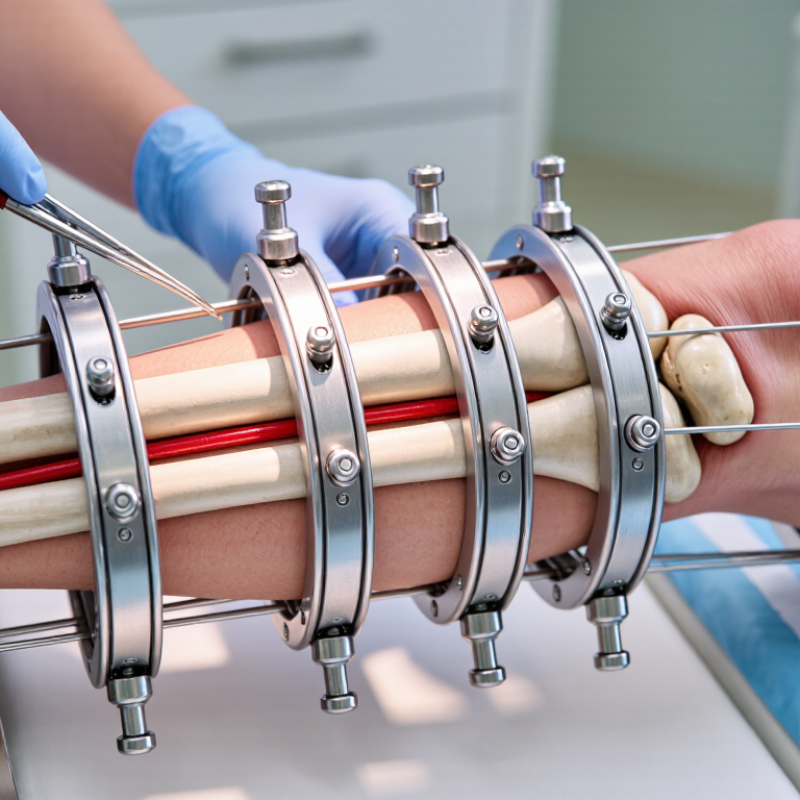
7 Tips for Buying Ilizarov External Fixators?

Define the Clinical Needs and Intended Use

Before comparing Ilizarov external fixators, define the clinical problems they must address. A frame intended for gradual limb lengthening may need different components from one used to stabilize a complex fracture or correct a deformity. Write down the planned procedures, expected patient range, and likely treatment duration. Include practical details, such as whether the team needs circular rings in several diameters or adjustable struts for staged correction.

Be specific. A small ring may fit one patient but leave little room for swelling or dressings. Consider wire and pin options, adjustment access, imaging compatibility, and how easily staff can inspect the frame. Ask surgeons and clinical engineers to review the proposed configuration against their usual techniques. The supplier’s product information can help, but it does not replace clinical judgment or local protocols.

Think beyond the operating room. Who will teach patients to clean pin sites and make adjustments? How will follow-up work when a patient lives far from the clinic? These details affect whether a technically suitable system is manageable in daily care. It is tempting to buy one versatile set for every case. That assumption may fail. Compare the intended use with the actual patient population, available expertise, and support needs; document any uncertainty before placing an order.

Check Regulatory Approval and Manufacturer Credentials

Tip 1: Confirm regulatory approval for the exact Ilizarov fixator model in your country or region. Search the relevant regulator’s official database, and match the model name, intended use, and manufacturer details. A company’s registration does not automatically mean every product it sells is authorized. Keep a copy of the listing for your records.

Tip 2: Check the manufacturer’s credentials independently. Ask for current quality-system certificates and verify the certificate number, issuing organization, expiry date, and scope. The scope should cover the relevant orthopedic devices. Paper can look convincing. A certificate alone cannot prove that a device is suitable for a particular patient, so involve an orthopedic specialist in product selection.

Tip 3: Request clear instructions for use, material information, sterilization details, and device traceability. Confirm how to contact the manufacturer about complaints, recalls, replacement parts, or technical questions. Match the documents to the exact model being supplied. Do not guess. A checklist can still miss details, especially when documents use unfamiliar terms; ask a qualified clinician or procurement professional to review anything unclear before purchase.

Compare Frame Designs, Components, and Compatibility

An Ilizarov external fixator is a modular system, so compare the frame as a working assembly, not just a product photo. Ring size and shape affect limb access, dressing changes, and room for planned adjustments. Full rings can provide broad support, while half-rings or arches may improve access; suitability depends on anatomy and the treatment plan. Check that rods, hinges, and telescopic struts can be positioned without obstructing pin sites or imaging. Small details matter.

Review each component’s interface and documented compatibility. Confirm wire and pin diameters, clamp ranges, thread standards, and connector geometry against the system specifications. A part that looks compatible may still loosen or restrict adjustment. Check twice. Ask about load limits, corrosion resistance, cleaning or sterilization instructions, and whether components are single-use or reusable. Availability of replacement parts also matters during longer treatment. Have the orthopedic team verify the proposed configuration and any component substitutions before use. Compatibility is not always obvious, and documentation can be incomplete; that deserves a careful follow-up rather than a guess.

7 Tips for Buying Ilizarov External Fixators: What to Verify

Use this checklist to compare frame designs, components, and compatibility. Bar values count the verification items listed for each area; they are not clinical performance ratings. Confirm system-specific interfaces and intended use with the manufacturer’s documentation and a qualified clinical team.

Assess Adjustability, Materials, and Ease of Handling

Tip 1: Check adjustability against the treating clinician’s planned frame configuration. Ring diameter, strut travel, and connection points should match the intended application. Ask how finely the frame can be adjusted and whether replacement parts remain available. Small increments matter. Compatibility is easy to overlook.

Tip 2: Review the materials and their documentation. Stainless steel and titanium are common choices, but material alone does not prove suitability. Check surface finish, corrosion information, cleaning instructions, and traceability documents. Confirm that wires, pins, clamps, and rings are designed to work together. A polished surface can look reassuring, but appearance is not evidence.

Tip 3: Consider handling before purchase. Ask staff to demonstrate assembly and routine adjustments using the specified tools. Can clamps be reached when the frame is in place? Are markings readable under bright clinic lights? Gloves can make small knobs awkward. A brief hands-on check may reveal practical annoyances that a product sheet misses. Discuss final selection and setup with the treating team; ease of use cannot replace clinical fit.

Review Training, Sterilization, Support, and Total Cost

Before purchasing an Ilizarov external fixator, ask for hands-on training in frame assembly, wire tensioning, pin-site care, and troubleshooting. A short demonstration is not enough; staff should practice with the actual instruments and document competency. WHO’s 2016 Global Guidelines for the Prevention of Surgical Site Infection report a pooled incidence of 11.8 infections per 100 surgical patients in low- and middle-income countries. That figure is not specific to fixators, but it underlines why sterilization and infection-prevention workflows deserve close review. Check that every reusable component has clear cleaning and sterilization instructions compatible with your facility’s equipment. Confirm the required cycle, tray configuration, and drying steps. Small gaps matter.

Support needs testing, too. Ask how quickly technical help responds, whether spare parts are stocked, and what happens when a component is damaged mid-treatment. CDC guidance classifies devices entering sterile tissue as critical items requiring sterilization; verify that the supplier’s instructions support a validated process at your site. Then calculate total cost, not just the purchase price: frames, wires, pins, sterilization trays, training time, maintenance, replacements, and possible procedure delays. Request a written parts list and service terms. I would compare these line by line, though forecasting every replacement is imperfect. A spreadsheet will not capture every interruption. Still, it can expose a low quote that leaves essential tools or support out.

7 Tips for Buying Ilizarov External Fixators? — Review Training, Sterilization, Support, and Total Cost

Tip What to Review Practical Checks Why It Matters
1. Match the system to intended use Confirm the proposed configuration supports the procedures and patient needs for which it will be used. Review available ring sizes, connecting rods, clamps, wires, half-pins, and adjustment components with the clinical team. A suitable component range helps the team plan the frame configuration; no single setup fits every case.
2. Verify training and education Check what initial and ongoing education is available for surgeons, operating-room staff, and relevant support teams. Ask whether training covers assembly, component selection, instrument handling, and access to current instructions for use. External fixation requires familiarity with the system and its instructions; training arrangements should be clear before purchase.
3. Confirm sterilization requirements Establish which parts are reusable or single-use and identify the validated cleaning and sterilization process for reusable items. Obtain the device-specific instructions for use; check disassembly, cleaning, inspection, packaging, and sterilization parameters with sterile-processing staff. Processing requirements vary by device. Do not assume a generic cycle is appropriate; follow the manufacturer’s validated instructions and local policy.
4. Check component compatibility and availability Review how components connect and whether replacement parts and compatible instruments can be obtained when needed. Request a component list, compatibility information, ordering details, and confirmation of which parts are supplied in the initial set. Clear compatibility and replenishment information can reduce uncertainty when planning inventory and future cases.
5. Assess technical support and service Clarify how questions about setup, instruments, repairs, and product issues are handled. Ask about support hours, response routes, repair or replacement processes, and access to current product documentation. Defined support arrangements help the facility plan for routine questions and instrument or supply issues.
6. Calculate the total cost of ownership Compare the full expected cost, not just the initial set price. Include instruments, reusable and single-use components, sterilization supplies and staff time, training, shipping, repairs, replacement parts, and storage. A complete cost view makes comparisons more useful and can reveal recurring expenses that are not included in the purchase price.
7. Review documentation and purchasing requirements Ensure the product documentation and supply arrangements meet the facility’s applicable regulatory and procurement requirements. Request current instructions for use, product specifications, traceability information, warranty terms, and relevant conformity or registration documentation for the market. Requirements vary by jurisdiction and facility; confirm them with the appropriate regulatory, clinical, and procurement teams before ordering.

FAQS

How should a clinic choose an external fixator configuration?

Start with the planned procedure, patient range, and expected treatment duration. Limb lengthening, fracture stabilization, and deformity correction may need different components.

Why do ring size and shape matter?

Rings need to fit the limb while leaving room for swelling, dressings, and access to pin sites. Small details matter.

Which components should staff check for compatibility?

Check wire and pin diameters, clamp ranges, thread standards, and connector geometry. Parts that look compatible may still loosen or limit adjustment.

What documents should be reviewed before purchase?

Request instructions for use, material details, sterilization guidance, and traceability information for the exact model. Do not guess.

How can a clinic confirm regulatory approval?

Check the relevant regulator’s official database. Match the listed model, intended use, and manufacturer details to the product being considered.

What should clinics know about quality certificates?

Verify the certificate number, issuer, expiry date, and scope independently. A certificate alone does not establish that a device suits a specific patient.

What practical support should be planned for patients?

Consider who will teach pin-site care and frame adjustments, and how follow-up will work for patients living far from the clinic. Distance changes things.

Who should review the proposed configuration?

Ask orthopedic clinicians and clinical engineers to assess it against the treatment plan and local protocols. A checklist can still miss details, so unclear information deserves follow-up.

Conclusion

Choosing Ilizarov External Fixators begins with a clear understanding of the clinical need, the intended application, and the requirements of the treating team. Buyers should verify that the device has appropriate regulatory approval for its intended use and that the manufacturer can provide reliable documentation and technical support. Comparing frame designs, rings, rods, wires, and other components can help determine whether a system offers suitable configurations and compatibility for the planned treatment.

Practical handling matters too. Consider how easily the frame can be adjusted, the materials used, and whether components are durable and straightforward to manage. Before making a decision, review training resources, sterilization requirements, maintenance needs, after-sales support, and the total cost over the device’s expected use. A careful comparison of these factors can help healthcare facilities select a system that fits clinical workflows, supports safe use, and meets their operational needs.

Ethan

Ethan

Ethan is a professional marketing specialist and a trusted voice behind the company’s expert blog. With a strong understanding of product strategy, customer needs, market trends, and digital communication, he transforms complex ideas into clear, practical, and engaging content. His work helps......
WhatsApp Chat with Siora Surgicals