Stay informed with the latest surgical insights, clinical updates, technological advancements, and expert guides from Siora Surgicals.
Veterinary orthopedic care depends on more than a well-designed implant. A surgeon may need a plate that fits a small dog’s radius, screws that hold securely in dense bone, or a system suited to a demanding fracture repair. Veterinary Orthopedic Implants must support practical surgical needs while meeting clear standards for material quality, dimensional consistency, and traceability. Small details matter.
China’s manufacturers serve a varied market, from clinics seeking familiar fixation systems to distributors evaluating broader product portfolios. This overview of ten manufacturers considers factors such as implant range, material information, production capabilities, quality documentation, and access to technical support. It also looks beyond catalog photos. Clear product specifications and responsive communication can help buyers assess whether a supplier is a suitable partner.
A manufacturer’s presence on a list does not prove that every product fits every patient or procedure. Veterinary teams should review current documentation, confirm compatibility, and use their own clinical judgment. Buyers may also need to verify certifications and quality claims directly, since public information can be incomplete or difficult to compare. A polished catalog is not enough. These comparisons offer a starting point, not a clinical endorsement, and some meaningful differences may remain hard to see until products are evaluated in practice.
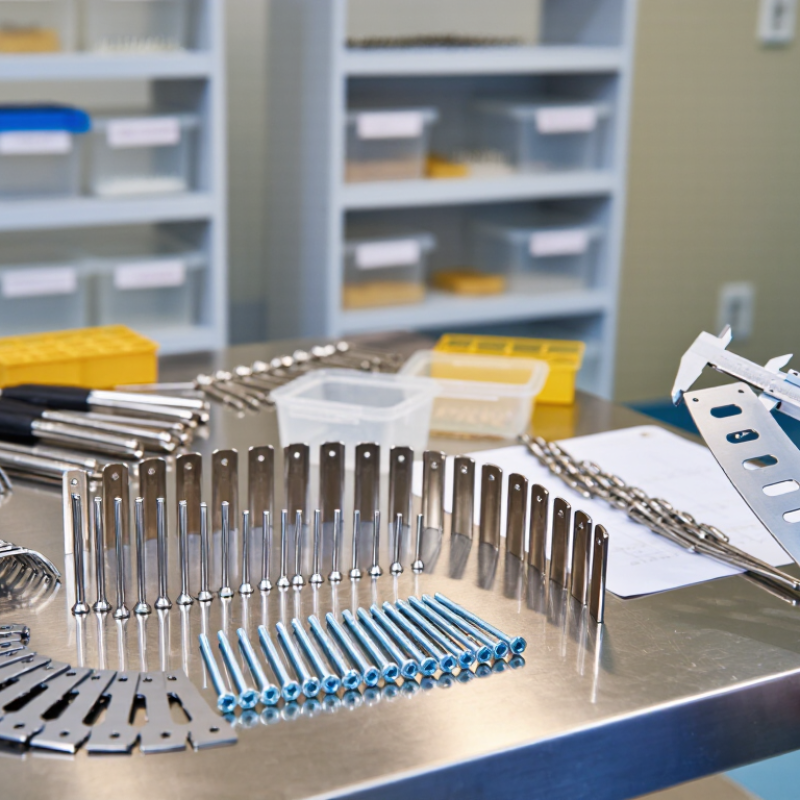
Veterinary orthopedic implants are devices used to stabilize bones and joints when injury, disease, or developmental problems affect movement. Their scope ranges from fracture repair to correcting limb alignment and supporting selected joint procedures. Common cases include a broken femur after a fall or an unstable knee that makes walking painful. Treatment choices depend on the animal’s size, anatomy, activity, and imaging findings. One implant does not fit every case.
Main product types include bone plates and screws, intramedullary pins, external fixation systems, and cerclage wires. Plates sit along the bone and hold fragments in alignment; pins are placed inside the bone’s central canal. External fixators use pins connected to a frame outside the limb, allowing clinicians to adjust support when needed. Materials may include stainless steel or titanium alloys. The right design matters, but surgical technique and follow-up matter too.
Tips: Ask how the implant will affect movement and what activity limits apply during healing. Keep follow-up imaging appointments, even when the animal seems comfortable. Watch for swelling, discharge, or sudden reluctance to bear weight, and contact the veterinary team if these appear. Recovery can be uneven. That part deserves honest discussion.
A credible evaluation looks beyond product photos and catalog size. Veterinary orthopedic implants must fit small, varied anatomy and perform reliably under demanding clinical conditions. Reviewers can examine material traceability, machining controls, and inspection records. Details matter. A smooth plate edge, consistent screw threads, and clearly labeled sizes can affect handling in surgery.
Manufacturers should provide understandable technical documents, including dimensions, material specifications, and test methods. Evidence is more useful than broad claims. Ask how products are checked for dimensional accuracy and how changes are recorded between production batches. Instrument compatibility also deserves attention: a well-made implant is less useful if its driver or drill guide fits poorly. Quality systems and independent test reports can strengthen confidence, but documents should be verified rather than accepted at face value.
Evaluation should also include veterinary experience, practical feedback, and dependable communication. A supplier’s ability to answer questions about packaging, storage, and product availability matters after the initial order. No scorecard is perfect. Factory audits cannot fully reproduce operating-room conditions, and a polished presentation may hide gaps in routine inspection. Comparing evidence across several suppliers, while seeking input from qualified veterinary surgeons, supports a more balanced assessment.
These anonymized profiles describe different supplier types, not audited company records. One manufacturer may focus on stainless-steel plates and screws for routine fracture repair. Another may offer titanium systems, with lighter implants and varied plate contours. A third profile centers on intramedullary pins and wires for selected long-bone cases.
Details matter.
A fourth supplier may provide locking plate systems and matching instruments. A fifth may emphasize small-animal sets, where screw size and handling can affect surgical workflow.
The remaining profiles highlight other areas: a sixth may produce external fixation components; a seventh, joint-reconstruction devices; an eighth, custom machining; a ninth, broad instrument kits; and a tenth, contract manufacturing for veterinary distributors. These are useful distinctions, not proof of clinical performance.
Not guaranteed.
Buyers should check material specifications, dimensional consistency, sterilization guidance, traceability, and access to replacement instruments. Ask for technical documents and sample-fit information, then compare them with the needs of the veterinary team. A polished catalogue cannot show how a plate behaves in a difficult case. Product claims and manufacturing capabilities should be verified directly, since public information may be incomplete or out of date.
A useful comparison of China’s ten veterinary orthopedic implant manufacturers should look beyond product photos. Manufacturing begins with material selection and controlled machining. Titanium alloys are valued for their strength-to-weight balance, while stainless steel may suit particular implant designs. The right choice depends on the animal, procedure, and intended use. Small details matter.
During production, CNC machining can shape plates, screws, and fixation components to tight dimensions. Surface finishing and cleaning help remove residues and reduce rough edges. Buyers should ask how each batch is identified and whether material certificates remain traceable. A polished surface alone does not prove consistent quality.
Quality checks may include dimensional inspection, mechanical testing, and documented review of manufacturing records. Sterilization controls and packaging integrity also matter when products are supplied sterile. Ask for relevant test methods and evidence, not just a general claim of compliance. Records matter too. Even a strong testing program has limits: bench tests cannot predict every surgical outcome, and veterinary needs vary by species and bone size. Clear specifications and honest discussion of those limits make manufacturer comparisons more useful.
When comparing veterinary orthopedic implant suppliers, look beyond catalog size. Grand View Research’s Veterinary Orthopedic Implants Market report forecasts an 8.3% compound annual growth rate from 2024 to 2030. That signals a growing market, not proof that every product performs equally. Ask suppliers for material specifications, manufacturing traceability, sterilization details, and clear instructions for use. Can they identify the alloy and coating for each implant? Can they provide consistent lot records? These details matter when a small plate must fit a patient’s anatomy and withstand repeated loading.
Match the implant system to the procedure, the animal’s size, and the surgeon’s experience. Check whether screw diameters, plate thicknesses, and instruments are available in practical combinations. Request evidence behind claims about strength or wear, and clarify how product changes are communicated. Small details matter. A polished brochure can still leave unanswered questions about stock availability or instrument compatibility. That is easy to overlook. Compare technical support and delivery reliability, too; a delayed component can complicate surgical planning. Market growth is useful context, but it cannot replace clinical judgment or case-specific evidence. Suppliers should welcome precise questions, even when the answers reveal limitations.
Supplier evaluation framework—not a ranked list of companies. The table summarizes verifiable comparison criteria; actual product specifications and regulatory requirements vary by supplier, product, and destination market.
| No. | Comparison factor | What to compare | Evidence or practical benchmark | Why it matters |
|---|---|---|---|---|
| 1 | Implant materials | Material grade and product-specific material specifications for plates, screws, pins, and other implants. | Request material certificates. Common reference specifications include ISO 5832-1 for wrought stainless steel and ASTM F136 for wrought Ti-6Al-4V ELI; confirm the exact grade used in each product. | Material composition and processing affect strength, corrosion behavior, and suitability for the intended application. |
| 2 | Product range and sizing | Available implant types, dimensions, hole patterns, screw sizes, and options for different patient sizes and procedures. | Review current catalogs, dimensional drawings, size charts, and instrument lists; check compatibility between plates, screws, and instruments. | A well-matched size range helps clinicians select implants appropriate to patient anatomy and the planned fixation method. |
| 3 | Mechanical performance data | Test methods and results relevant to the design, such as bending, torsional, or fatigue performance. | Ask for test reports identifying the tested configuration, sample count, method, acceptance criteria, and results. Compare like-for-like designs and sizes. | Results are meaningful only when the test setup reflects the implant design and intended use; avoid relying on unsupported strength claims. |
| 4 | Quality management system | Documented controls for design, production, inspection, nonconformities, and corrective actions. | Request a current quality-system certificate and verify its scope and validity. ISO 13485 is a quality-management standard for medical devices; certification alone does not establish product performance or market authorization. | Consistent process controls support repeatable production and effective handling of quality issues. |
| 5 | Biological safety documentation | The biological evaluation approach for materials and finished products, considering contact type and duration. | Request the relevant risk assessment and supporting test or materials data. ISO 10993 provides a framework for biological evaluation; it is not, by itself, a product approval. | Evaluation should be appropriate to the implant, its materials, manufacturing processes, and intended contact with the body. |
| 6 | Manufacturing and inspection controls | Controls for machining, surface finishing, cleaning, dimensional inspection, and final product release. | Review inspection records or sample reports for critical dimensions, surface condition, and product identification; ask how process changes are controlled. | Manufacturing variation can affect fit, screw engagement, surface quality, and consistency between lots. |
| 7 | Sterilization and packaging | Whether products are supplied sterile or non-sterile, packaging configuration, and validated processing information where applicable. | Check product labeling, packaging integrity information, and sterilization validation documentation for sterile products. ISO 11135 and ISO 11137 address ethylene oxide and radiation sterilization processes, respectively. | Clinics need clear instructions and packaging information to manage storage, handling, and preparation for use. |
| 8 | Traceability and documentation | Lot or batch identification, product labeling, certificates, and the ability to trace supplied items through production records. | Request sample labels and documentation, and confirm that identifiers link to relevant production and inspection records. | Traceability supports inventory control, complaint investigation, and targeted follow-up if a quality issue arises. |
| 9 | Regulatory and market documentation | Documentation applicable to the product type and the markets where it will be supplied, including any required registrations or authorizations. | Verify documents with the relevant authority or database where available. Confirm that certificates and registrations cover the specific product and intended market. | Regulatory requirements differ by jurisdiction and product classification; a document for one market may not meet another market’s requirements. |
| 10 | Supply reliability and support | Lead times, order minimums, stock availability, replacement handling, technical documents, and response to product questions. | Compare written delivery terms, recent fulfillment records, service contacts, and procedures for complaints or returns. | Reliable supply and responsive support help clinics maintain compatible implants and instruments and address issues promptly. |
Review material traceability, machining controls, inspection records, and clearly labeled sizes. Product photos are not enough.
Titanium alloys offer a useful strength-to-weight balance. Stainless steel may suit other designs. The right choice depends on the animal and procedure.
Ask about CNC machining, surface finishing, cleaning, and dimensional inspections. Check whether each batch can be traced. Details matter.
Request dimensions, material specifications, test methods, and records of production changes. A polished document can still leave questions.
A plate may be well made, but a poorly fitting driver or drill guide can complicate handling. Ask how compatibility is checked.
Dimensional inspections, mechanical tests, manufacturing-record reviews, and relevant sterilization checks can provide evidence. Not always.
Confirm packaging integrity, storage guidance, and product availability. For sterile products, ask how sterilization controls are documented.
Not fully. Operating-room conditions and animal anatomy vary. A checklist can still miss something, so qualified veterinary feedback matters.
This article provides a practical overview of Veterinary Orthopedic Implants, including their scope, common clinical uses, and main product types for supporting fracture repair and joint or bone procedures in animals. It explains how manufacturers can be assessed through factors such as production capabilities, technical expertise, quality management, and the consistency of their products. The article also presents profiles of ten Chinese manufacturers, focusing on their general areas of specialization without endorsing any single supplier.
In addition, the guide outlines key manufacturing processes, commonly used materials, and relevant quality considerations. It offers a framework for comparing suppliers and selecting implants based on factors such as design, material properties, product range, manufacturing consistency, and compatibility with veterinary needs. Together, these topics help readers better understand the market and make informed, responsible decisions when evaluating veterinary orthopedic products.