China’s Cannulated Screw System manufacturing sector has become an important source for orthopedic fixation solutions. Its suppliers serve hospitals, distributors, and medical-device brands worldwide. However, a “top 10” list should not rely on factory size alone. Product quality needs closer inspection.
This overview evaluates Chinese manufacturers through practical and technical criteria. These include implant materials, thread design, guidewire compatibility, cannulated diameter, instrument accuracy, sterilization options, and quality-control records. Experience matters here. A screw may look precise on a catalog page, yet small tolerances can affect insertion, compression, and surgical confidence. Some details are easy to overlook.
Orthopedic trauma specialist Dr. William M. Ricci has stated, “Good fixation starts with understanding the fracture, not with choosing the implant.” This principle applies directly to every Cannulated Screw System. Manufacturers must understand different fracture patterns, bone conditions, and surgical approaches. They also need reliable communication with surgeons and purchasing teams.
The selected companies are discussed as potential industry leaders, not as universally superior suppliers. Performance can vary by model, production batch, regulatory market, and clinical application. That limitation deserves attention. A responsible buyer should request technical files, material certificates, inspection reports, and product samples before making a decision. Traceability matters.
Small components. Serious consequences.
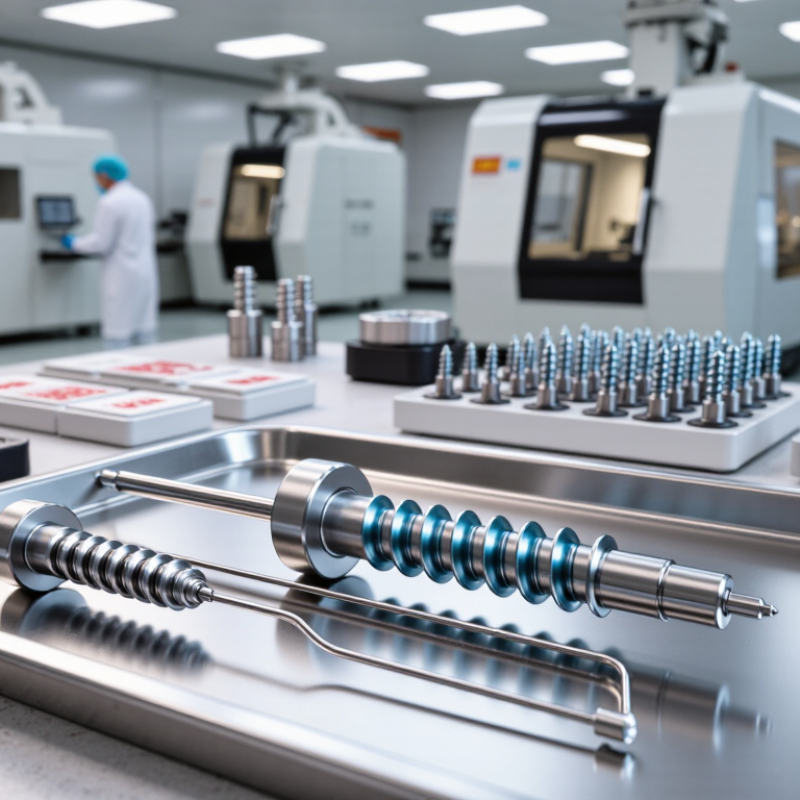
China’s leading manufacturers increasingly combine CNC machining, automated inspection, clean assembly areas, and customized instrumentation. Still, equipment alone does not prove reliability. Consistent validation, transparent documentation, and responsive after-sales support reveal a supplier’s real professional maturity. This guide offers a practical starting point for comparing the China Top 10 Cannulated Screw System Manufacturers.
Definition and Clinical Role of Cannulated Screw Systems
China Top 10 Cannulated Screw System Manufacturers
A cannulated screw system is an orthopedic fixation device with a hollow central channel. This channel allows placement over a guidewire. Surgeons can check alignment before advancing the screw. The design supports controlled fixation in fractures, osteotomies, and selected joint procedures. Screw diameter, thread length, pitch, and material influence stability. Small details matter.
Clinically, cannulated screws help reduce soft-tissue disruption and improve placement accuracy. Fluoroscopy commonly guides the wire and confirms screw depth. In a typical procedure, the surgeon first restores fracture position. The guidewire then crosses the intended path. Drilling and screw insertion follow that track. Stable compression may support bone healing, especially in suitable fracture patterns.
They are not automatically superior. A hollow screw can bend, break, or lose purchase when bone quality is poor. Incorrect wire placement may damage nearby structures. Repeated imaging also requires disciplined radiation management. Clinical judgment remains central. Age, fracture geometry, bone density, and loading demands should guide selection. A technically precise screw may still be clinically wrong. This is where experience matters. Surgeons should review imaging, instrument condition, and fixation goals before insertion. Performance also depends on training and careful postoperative monitoring. "Simple" is misleading.
| No. | Representative System Configuration | Typical Screw Diameter | Common Length Range | Thread Configuration | Typical Material | Guidewire and Insertion Features | Primary Clinical Role | Imaging and Sterilization Considerations |
|---|---|---|---|---|---|---|---|---|
| 1 | Mini-fragment cannulated screw system | 2.0–2.4 mm | 8–30 mm | Fully threaded or partially threaded | Titanium alloy or stainless steel | Fine guidewire, cannulated driver, and countersink; intended for controlled fragment fixation | Small-fragment fixation in hand, wrist, foot, and selected facial or pediatric applications | Radiographic confirmation is typically used; implant compatibility and sterilization instructions must follow the device labeling |
| 2 | Small-fragment compression screw system | 2.5–3.0 mm | 10–40 mm | Partially threaded for interfragmentary compression | Titanium alloy or stainless steel | Guidewire-guided drilling, depth measurement, countersinking, and controlled compression | Fixation of small articular or periarticular fragments and osteotomies | Metal implants may produce image artifact; MRI conditions must be checked in the applicable instructions for use |
| 3 | 3.5 mm cortical cannulated system | 3.5 mm | 20–70 mm | Fully or partially threaded | Stainless steel or titanium alloy | Guidewire-based placement with optional depth gauge and compression instrumentation | Small- to medium-fragment fixation, including selected malleolar, radial, and metatarsal procedures | Designed for intraoperative fluoroscopic verification; reprocessing is dependent on reusable instrument instructions |
| 4 | 4.0 mm cancellous cannulated system | 4.0 mm | 20–80 mm | Partially threaded cancellous profile | Titanium alloy or stainless steel | Guidewire placement with cancellated-thread purchase and optional washer use | Fixation in metaphyseal or cancellous bone, including selected foot, ankle, and upper-limb indications | Fluoroscopy may assist trajectory and length assessment; use only validated cleaning and sterilization cycles |
| 5 | 4.5 mm large-fragment cannulated system | 4.5 mm | 25–100 mm | Fully threaded or partially threaded compression design | Stainless steel or titanium alloy | Central guidewire, cannulated drill, depth gauge, and torque-controlled driver options | Medium- to large-fragment fixation and selected osteotomy or arthrodesis procedures | Radiographic assessment is commonly used; implant-specific MRI and sterilization guidance is required |
| 6 | 5.0 mm headless compression system | 4.0–5.0 mm | 20–80 mm | Variable-pitch, differential-pitch, or dual-thread design | Titanium alloy or stainless steel | Guidewire-guided insertion with recessed or buried head; compression is generated during advancement | Arthrodesis, osteotomy, and fracture fixation where reduced implant prominence is desirable | Implant position is generally checked with fluoroscopy; headless design does not eliminate MRI or implant-specific safety requirements |
| 7 | 6.5 mm hip and pelvic cannulated system | 6.5 mm | 30–120 mm | Partially threaded or fully threaded | Stainless steel or titanium alloy | Long guidewire, cannulated drill, calibrated depth gauge, and optional washers | Selected pelvic, acetabular, femoral neck, and large-fragment fixation applications | Accurate guidewire positioning is critical; fluoroscopy or other imaging may be used to reduce penetration risk |
| 8 | 7.3 mm large cancellous screw system | 7.0–7.3 mm | 40–150 mm | Partially threaded cancellous profile | Stainless steel or titanium alloy | Large-diameter guidewire, cannulated drilling, countersinking, and washer-supported insertion when indicated | Large-fragment fixation in cancellous bone and selected pelvic, ankle, or hindfoot procedures | Long-screw trajectory and depth require image guidance; device-specific MRI conditions must be observed |
| 9 | Fully threaded positional fixation system | 3.5–7.3 mm | 20–120 mm | Fully threaded, non-compression or positional fixation | Titanium alloy or stainless steel | Guidewire-guided placement; designed to maintain alignment without relying primarily on thread-to-head compression | Maintenance of reduction, syndesmotic fixation, arthrodesis, and situations requiring positional stabilization | Imaging is used to confirm alignment and implant length; the selected system’s MRI labeling remains applicable |
| 10 | Long cannulated screw and washer system | 4.5–7.3 mm | 60–180 mm | Partially threaded or fully threaded | Stainless steel or titanium alloy | Extended guidewire and cannulated instrumentation; washers may distribute load in weaker or thin cortical bone | Long-bone, pelvic, hindfoot, and complex large-fragment fixation where extended reach is required | Long implants require careful radiographic planning; cleaning, sterilization, and MRI use must follow the applicable device documentation |
Note: The specifications above are representative clinical and engineering ranges for cannulated screw systems rather than data attributed to any specific company or brand. Actual diameters, lengths, thread profiles, materials, instruments, indications, MRI conditions, and sterilization parameters vary by device and must be verified in the manufacturer’s current instructions for use.
FAQS
Request dimensional tolerances, thread geometry, material certificates, and surface-finish data. Traceability should connect raw material to each finished lot. Vague material descriptions are insufficient.
Stable guidewire passage, clear depth markings, and compatible instruments support consistent handling. Thread pitch influences insertion control and purchase strength. Small differences matter.
Confirm whether titanium alloy or stainless steel matches the intended application. Review corrosion data, rigidity requirements, and documented biocompatibility evidence. Do not rely on “medical grade” alone.
Certification can provide a useful starting point. Also examine corrective actions, supplier controls, process validation, and risk management records. Certificates alone are not enough.
Depending on the design, review torsion, insertion, fatigue, and axial pullout testing. Ask for methods, sample sizes, acceptance limits, and failure definitions. Numbers need context.
Request samples from the same production line used for routine orders. Check thread consistency, head geometry, burrs, surface finish, and guidewire fit. Hold the parts under bright light.
Look for CNC inspection, coordinate measuring, cleaning validation, and batch records. Review tooling changes, operator records, and instrument compatibility checks. Narrow channels can retain particles.
Check registration through official databases in the target market. Review packaging integrity, sterilization status, shelf-life studies, labeling, and complaint handling. Verify independently when possible.
Discuss drawings, tolerances, delivery schedules, labeling, and change control with technical staff. Fast replies may still conceal weak evidence. I should not confuse speed with maturity.
No. An audit shows conditions at one moment. Combine it with sample inspection, independent verification, surgeon feedback, and production records. A polished catalog can hide gaps.
Conclusion
This article provides a practical overview of the Cannulated Screw System, explaining its structure, clinical role, and advantages in orthopedic procedures that require accurate fracture fixation. It introduces the main factors used to evaluate manufacturers, including product design, material quality, dimensional precision, sterilization capability, quality management, regulatory compliance, production capacity, and technical support.
The article also presents profiles of China’s top 10 cannulated screw system manufacturers without focusing on brand promotion, highlighting their general strengths in product technologies, material selection, machining, coating, packaging, and manufacturing control. In addition, it explains how buyers can compare suppliers according to clinical requirements, customization options, documentation, delivery reliability, after-sales service, and long-term cooperation potential. The goal is to help hospitals, distributors, and medical device purchasers make informed decisions and select a dependable Chinese supplier that can provide safe, consistent, and clinically suitable solutions.