Knowledge & Insights

Orthopedic Medical Blog

Stay informed with the latest surgical insights, clinical updates, technological advancements, and expert guides from Siora Surgicals.

0%

China’s leading Ankle Locking Plate System manufacturers are worth comparing on more than catalogue breadth. A plate may look precise in a product photograph. In the operating room, its contour, screw trajectory, and fit around a specific fracture matter more. Surgeons also consider alloy, locking-hole design, instrument compatibility, and how clearly product information describes intended use. Small details count.

Orthopedic trauma surgeon Dr. David Sanders has published on ankle-fracture care. A paraphrase of a relevant clinical principle is: “Fixation must suit the fracture and respect the soft tissues.” This is a paraphrase, not a verified verbatim quotation. It points to a practical question for buyers: does the system offer useful options for different fracture patterns without making selection needlessly complicated? A neat catalogue does not answer that alone.

This outline will examine Chinese manufacturers through product range, manufacturing capability, quality documentation, clinical support, and export experience. It will also consider how companies communicate sizing, compatible screws, surgical instruments, and traceability. Buyers should verify claims directly and assess evidence against their own clinical and procurement requirements. No catalogue tells the whole story. Supplier comparisons can be imperfect, especially when public information varies. That deserves scrutiny, not a confident ranking based on marketing language alone. The aim is a clear, evidence-conscious guide to the Ankle Locking Plate System market in China.
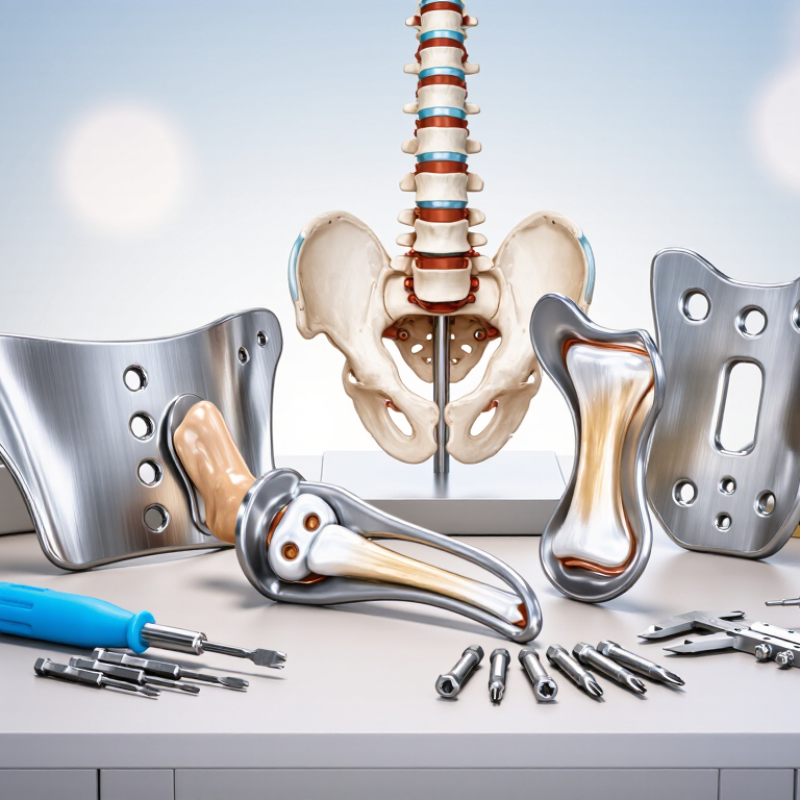
China Top Ankle Locking Plate System Manufacturers

What Is an Ankle Locking Plate System?

An ankle locking plate system is an implant used to stabilize certain fractures around the ankle. It typically includes a shaped metal plate and screws designed to attach the plate to bone. The plate rests against the bone, often along the lower tibia or fibula. In a locking system, screw heads engage threaded holes in the plate, creating a fixed-angle connection. This can help maintain alignment when bone fragments are small or bone quality is reduced. It does not make every fracture suitable for plating. A surgeon considers the fracture pattern, soft tissues, imaging, and the patient’s health before choosing a treatment.

Tips: Ask what the plate is intended to stabilize and how follow-up imaging will assess healing. Keep the incision area clean as directed by the care team. Small details matter.

The term “locking” can sound like a guarantee, but it is not. Healing still depends on factors such as blood supply, fracture severity, and following the rehabilitation plan. Plates may also require careful placement near ankle joints and tendons. The right system is therefore selected for the individual injury, not by name alone. Pain, swelling, or recovery concerns should be discussed with a qualified clinician.

Key Components and Design Features of Ankle Locking Plates

An ankle locking plate system combines a shaped plate with locking and, in some designs, compression screw holes. The plate supports fixation around the distal tibia or fibula, where bone shape and limited space can make placement demanding. Threaded holes engage compatible screw heads, helping create a fixed-angle construct. Conventional holes may allow compression or adjustment, depending on the system. Fit matters.

Plate contours, hole positions, and screw directions influence how well the construct suits a specific fracture pattern. Low-profile edges may reduce prominence beneath soft tissue, but no design eliminates irritation risk. Titanium and stainless steel are common implant materials; the choice depends on the system and clinical plan. One detail is easy to overlook: a plate that looks suitable on a diagram may not match a patient’s anatomy or imaging. Selection and placement require trained clinical judgment, and outcomes vary with bone quality, injury, and healing.

Tips: Review imaging and the intended screw paths before selecting a configuration. Check plate position against the patient’s anatomy, not just the product outline. Small details count. Even careful planning may need adjustment during surgery.

How Ankle Locking Plate Systems Are Manufactured in China

China’s ankle locking plate production begins with design inputs: fracture patterns, bone anatomy, and screw trajectories. Engineers convert these into CAD models, then machine prototype plates for fit and strength checks. Small details matter. A poorly finished locking hole can affect screw engagement.

Production commonly uses medical-grade titanium alloy or stainless steel, though material choice depends on the device design. CNC machining forms the plate and threaded holes; operators then remove burrs, inspect surfaces, and verify dimensions. Heat treatment or surface finishing may follow, with cleaning and validated sterilization before packaging. Quality checks can include thread-fit tests, dimensional inspection, corrosion assessment, and fatigue testing. The exact sequence varies by factory and product. It should be documented, not assumed.

Market growth helps explain investment in this work, but it does not prove manufacturing quality. MarketsandMarkets’ Orthopedic Devices Market report estimated the global market at about US$57.3 billion in 2023, with a projected US$74.8 billion by 2028. For buyers assessing Chinese suppliers, the useful evidence is process-specific: material traceability, inspection records, test methods, and change controls. A polished sample is not enough. One limitation remains: published market reports rarely separate ankle plates from broader orthopedic categories, so their figures should not be treated as ankle-system sales.

How to Assess Chinese Ankle Locking Plate Manufacturers

Assessing Chinese ankle locking plate manufacturers requires more than comparing prices or catalog photos. The Global Burden of Disease 2019 Fracture Collaborators estimated 178 million new fractures worldwide that year; this figure covers all fractures, not ankle injuries alone. It shows the scale of fracture care, but it cannot prove a particular plate’s performance.

Request current ISO 13485 certification and check that its scope covers the relevant manufacturing activities. Ask for mechanical test reports aligned with ASTM F382, the standard test method for metallic bone plates. Look for bending strength and stiffness results, sample sizes, and lot traceability—not just a pass statement. That matters. Review how the manufacturer controls titanium or stainless-steel materials, machining, surface finishing, and locking-screw fit. A clean sample is not enough; production consistency needs evidence.

For ankle-specific evaluation, request drawings, dimensional tolerances, and validation for the intended screw and plate combinations. Ask how the system accommodates different fracture patterns and whether usability testing reflects real surgical workflows. Review complaint handling, corrective actions, and post-market monitoring records. A certificate alone cannot show clinical suitability. I would also question vague claims of “better fixation” when no test method or comparison is provided. Some paperwork may look polished; the underlying data still deserve scrutiny.

China Top Ankle Locking Plate System Manufacturers - How to Assess Chinese Ankle Locking Plate Manufacturers

Assessment dimension Suggested weight What to verify Useful evidence or questions
Regulatory status and product traceability 20% Confirm that the specific plate and screw system is covered by the applicable registration or authorization for the intended market. Check that product codes, intended use, and manufacturing site details are consistent across documents. Request relevant registration or authorization documents and verify them with the issuing regulator or official database. Ask for model-level traceability and a sample lot record. Requirements vary by destination market.
Quality management system 15% Assess whether documented quality processes cover design and production controls, supplier management, nonconformities, corrective actions, and product traceability. Review the current quality-system certificate, its scope, covered site, and issuing body. Ask how complaints, recalls, and corrective actions are handled.
Materials and manufacturing controls 15% Check the stated implant material, material specifications, supplier controls, and process validation relevant to the finished plates and screws. Confirm that material claims apply to the offered product models. Request material certificates, incoming inspection records, and information on machining, surface finishing, cleaning, and packaging controls. Compare documentation with the product labeling and technical file.
System compatibility and product range 12% Establish which plate configurations, sizes, screw types, and instruments are included. Verify that compatible components are clearly identified and that the system has appropriate instructions for use. Request a current catalog, size matrix, compatibility chart, surgical technique, and instructions for use. Ask how component revisions and compatibility changes are controlled.
Design verification and performance evidence 12% Review evidence supporting the device design and intended use, including relevant mechanical testing and risk-management documentation. Test methods should be appropriate to the device and stated claims. Ask for test summaries, protocols or standards used, acceptance criteria, and risk-management summaries. Check that results correspond to the offered models and configurations.
Sterilization and packaging 10% Clarify whether products are supplied sterile or non-sterile, and confirm that labeling, packaging, and shelf-life claims match the product configuration and market authorization. For sterile products, request applicable sterilization validation and packaging validation summaries. Ask for shelf-life evidence and instructions for storage and handling.
Production capacity and delivery reliability 8% Evaluate production planning, inventory controls, lead-time communication, and the ability to maintain supply of the specific sizes and instruments required. Request recent, documented lead-time ranges, minimum order quantities, stock policies, and a contingency plan for supply interruptions. Validate performance through a trial order where appropriate.
Technical support and post-market response 8% Assess responsiveness for documentation requests, product questions, complaints, and field actions. Confirm who is responsible for local support in the destination market. Ask for written complaint-handling and escalation procedures, response-time commitments, training materials, and contact details for the responsible local representative if required.
Total suggested assessment weight 100% Suggested evaluation framework only; adjust weights to the intended market, procurement requirements, and clinical evaluation process.

Quality Standards and Selection Factors for Buyers

For buyers comparing ankle locking plate system manufacturers, quality starts with repeatable production, not polished brochures. Ask for documented material grades, dimensional inspection records, and lot-level traceability. Plate contours and screw-hole positions should remain consistent across production batches. Small deviations can affect fit and fixation. Details matter.

Review evidence for mechanical performance, including fatigue testing and corrosion resistance, and check how test conditions relate to intended use. Confirm that locking screws and plates are validated as a system, rather than assuming components from different sources will match. Sterilization compatibility, packaging integrity, and clear instructions for use also deserve attention. Request current quality-system certificates and supporting technical files, then verify their scope and dates. A certificate alone is not proof of reliable performance.

Selection should include communication and supply reliability. Ask how the manufacturer handles nonconforming parts, design changes, and delayed shipments. Request samples for dimensional review and discuss feedback from qualified clinical users. A smooth sample does not guarantee consistent batches. Nor does a long checklist remove uncertainty. Buyers may need to weigh strong documentation against gaps in available performance data, and record why a supplier meets their practical requirements.

China Top Ankle Locking Plate System Manufacturers: Quality Standards and Buyer Selection Factors

Use these standards as checkpoints when assessing a supplier’s quality system, risk controls, biological safety, sterilization validation, and plate testing. The chart shows the cited edition years—not quality scores or confirmation that an edition is the latest applicable one.

Buyer note: Ask manufacturers for current certificates, applicable regulatory-market documentation, risk-management records, sterilization validation where relevant, and test reports for the specific plate system. Confirm each standard’s current edition and applicability with the issuing organization and your regulatory team.

FAQS

How are ankle locking plates typically manufactured?

Engineers create digital designs from bone anatomy, fracture patterns, and screw paths. Machines shape the plates and threaded holes. Operators remove burrs and inspect dimensions. Details matter.

Which materials are commonly used?

Medical-grade titanium alloy and stainless steel are common options. The selected material depends on the device design. Buyers should request material records and traceability for each production lot.

What quality checks should buyers request?

Ask for dimensional inspections, thread-fit checks, and mechanical test reports. Fatigue and corrosion results can also help. Request test methods, sample sizes, and lot details—not just a pass statement.

How can buyers assess a manufacturer’s quality system?

Request current quality-system certificates and confirm their scope covers the relevant work. Review inspection records, change controls, and corrective-action procedures. A certificate alone is not enough.

How should plate and screw compatibility be checked?

Ask for drawings, dimensional tolerances, and validation of intended plate-and-screw combinations. Components should be tested as a system. A close-looking thread may still fit poorly.

What should buyers examine beyond a sample plate?

Review records from multiple production lots and ask how consistency is monitored. Check surface finish, hole positions, packaging integrity, and sterilization compatibility. A polished sample can hide batch variation.

How can buyers judge claims about fixation performance?

Ask for the test method, comparison basis, and supporting results. Vague claims deserve careful review. I would still hesitate when the evidence is incomplete.

What practical factors belong in supplier selection?

Discuss delivery reliability, nonconforming parts, design changes, and communication. Qualified clinical users can provide useful feedback on samples. No checklist removes every uncertainty.

Conclusion

An Ankle Locking Plate System is an orthopedic fixation solution designed to support stabilization of certain ankle fractures. Its plate, locking holes, and compatible screws work together to help maintain fracture alignment while the bone heals. Design features may include anatomically shaped plates, multiple screw directions, and options for different fracture patterns. Selecting a system requires matching its configuration to the clinical need and considering factors such as fit, material properties, and ease of use.

In China, manufacturing typically involves design review, material processing, precision machining, surface finishing, cleaning, assembly, and inspection. Buyers assessing manufacturers can review production capabilities, quality-management procedures, product documentation, and consistency between batches. Relevant quality standards, traceability, testing practices, and clear technical support are also important selection factors. A careful evaluation helps buyers compare suppliers on reliability and suitability rather than price alone.

Amelia

Amelia

Amelia is a dedicated marketing professional with a strong understanding of the company’s products, customers, and market environment. Through her practical experience and continuous research, she transforms complex product information into clear, useful, and engaging content that helps readers......
WhatsApp Chat with Siora Surgicals