Stay informed with the latest surgical insights, clinical updates, technological advancements, and expert guides from Siora Surgicals.
Choosing among China’s leading Craniomaxillofacial Implants manufacturers requires more than comparing catalogues or quoted prices. These devices support delicate facial structures, where fit, material quality, and dependable production matter. A small plate beside the orbit, for example, must match the surgical plan without obstructing nearby anatomy. Details matter.
A useful principle, consistent with the clinical focus of facial-trauma surgeon Dr. Edward Ellis III, is: “An implant should restore function while respecting the patient’s anatomy.” This is an editorial paraphrase, not a verbatim quotation. It points to the questions buyers and clinical teams should ask: What materials are used? How are dimensions and tolerances checked? Can the manufacturer provide clear technical documentation and responsive support? These questions help separate meaningful evidence from polished marketing.
This guide examines manufacturers in China through practical criteria, including product range, manufacturing quality systems, customization options, and export experience. It does not treat a company’s location or promotional claims as proof of clinical performance. Independent verification still matters. Some supplier details may be difficult to compare, and that limitation deserves attention rather than a confident guess. The aim is to give surgeons, distributors, and procurement teams a clearer starting point for evaluating Craniomaxillofacial Implants—and for asking better questions before making a decision.
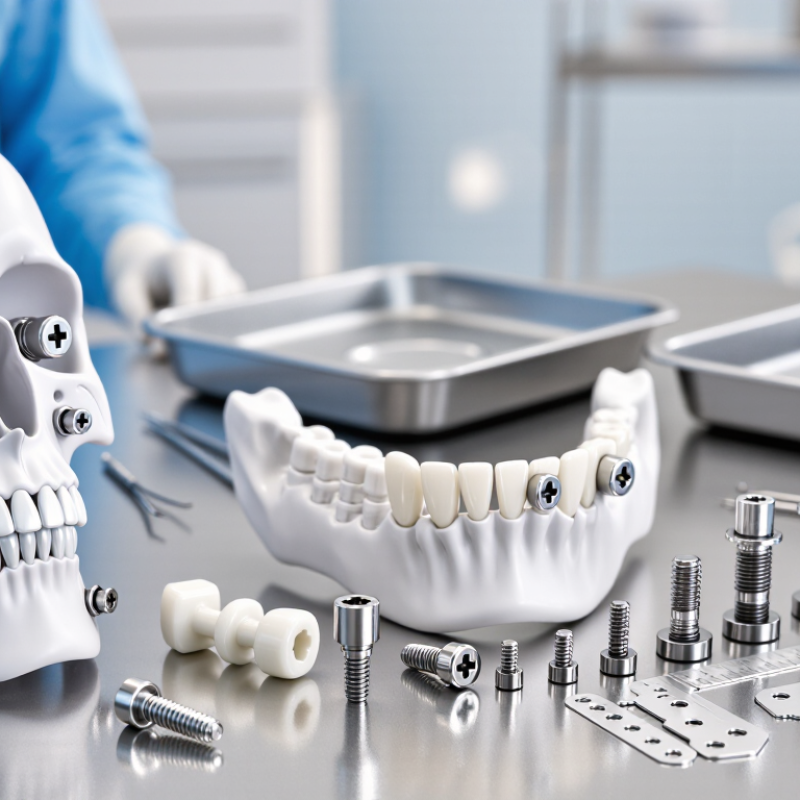
Craniomaxillofacial implants are medical devices used to stabilize or reconstruct bones of the skull, face, and jaws. They may include small plates, screws, mesh, or patient-specific implants. Materials often include titanium or selected resorbable polymers. The right choice depends on the defect, bone quality, and treatment plan.
Surgeons may use these devices after facial trauma, during jaw correction, or to repair defects around the eye socket and skull. A thin plate can hold a cheekbone fracture steady while bone heals. Mesh may support the orbital floor, helping restore the space beneath the eye. In reconstructive surgery, a custom implant can help match a missing section of bone. Not every injury needs hardware; that judgment can be less straightforward than it looks on a scan.
Tips: Ask what the implant is meant to support, how it will be fixed, and what follow-up imaging may be needed. Share allergies, previous operations, and any healing problems with the care team. Bring your questions to the surgeon. Recovery varies, and an implant does not remove the need for monitoring.
China’s craniomaxillofacial (CMF) implant industry is organized as a supply chain, not a single factory category. It includes metal and polymer material suppliers, precision-machining workshops, implant designers, contract manufacturers, and distributors serving hospitals. Some firms focus on plates, screws, and fixation systems; others develop patient-specific implants using imaging data. The work is exacting. A small contour mismatch can complicate surgical fit.
The China Medical Device Blue Book 2024 estimates China’s overall medical-device market at about RMB 1.35 trillion in 2023. This figure covers the wider sector, not CMF implants alone, so it should not be read as a segment sales estimate. NMPA registration requirements also shape how products move from design to clinical use. In practice, manufacturers need documented quality controls and evidence suited to each product’s classification. Hospitals and surgeons then provide feedback on handling, fit, and available sizes. One gap remains: public data rarely separates CMF implant revenue from broader orthopedic or surgical-device categories. That makes company comparisons less clear than buyers may expect.
Chinese manufacturers commonly produce fixation plates and screws for facial fractures and reconstructive procedures. These may include miniplates, mesh plates, and systems shaped for areas such as the cheekbone or lower jaw. Small details matter: screw diameter, plate thickness, and hole spacing affect how a device fits the surgical plan. A broad catalogue does not guarantee every configuration is available.
Cranial implants are another common category, including titanium mesh and patient-specific implants made from materials such as titanium or PEEK. Suppliers may also offer orbital floor implants and mandibular reconstruction plates. These devices serve different anatomical needs, so material, shape, and imaging-based planning should be considered together. Fit matters. A design that looks suitable on screen may need adjustment after clinical review.
Some manufacturers provide custom design and production based on CT data, while others focus on standard components. Capabilities vary, and product descriptions can use inconsistent terms. It is worth checking dimensional drawings, material specifications, manufacturing controls, and instructions for use before comparing options. Ask how design changes are reviewed. It matters. I would not judge a supplier by polished product images alone; clear technical documentation is more useful, though it still does not replace independent clinical and regulatory checks.
Assessing leading Chinese craniomaxillofacial implant manufacturers requires more than comparing catalogues or quoted prices.
The WHO Global Atlas of Medical Devices reports over two million device types worldwide, grouped into more than 7,000 categories. This scale makes product-specific evidence essential. Ask for material specifications, validated sterilization records, and traceability linking each implant to its production lot. Paperwork is not proof.
Review clinical evidence for the intended use, not just general orthopedic data. For a titanium cranial plate, inspect machining consistency, surface finish, and how screw holes align with the planned fixation pattern. Check whether design changes trigger documented risk reviews and updated verification tests.
ISO 13485 certification is a useful quality-system indicator, but it does not establish that every implant performs well in patients. The ISO Survey of Certifications tracks certificates across countries; compare that information with audit scope, production controls, and post-market complaint handling.
A factory visit can reveal practical details, such as how staff segregate finished implants from unverified components. One limitation: public data rarely allows direct comparison of complication rates between suppliers, so request clearly defined follow-up evidence and examine gaps rather than accepting polished claims.
A polished catalogue is not evidence of reliable production. Ask for the exact product’s regulatory status, intended use, and manufacturing-site details. For devices intended for China, verify applicable NMPA registration or filing information; for exports, check documentation against the destination market’s requirements. Names and addresses should match across certificates, labels, and quality records. Small mismatches matter.
ISO’s 2022 Survey reported 31,535 ISO 13485 certificates across 125 countries. That scale is useful context, not a supplier score: certification alone does not prove that a specific implant or process is covered. Check the certificate’s scope and validity, then request material specifications, lot-level traceability, dimensional inspection records, and evidence supporting biocompatibility and sterilization validation. Ask how changes to materials or production are controlled. Get the records, not just assurances.
Look closely at the implant itself. Can the supplier link a titanium plate or patient-specific component to its raw-material batch and inspection results? Request recent nonconformance, complaint, and corrective-action summaries, with commercially sensitive details appropriately redacted. Review sample packaging and labels, too; a clean component still needs clear identification and intact sterile-barrier evidence where applicable. Video tours help, but they miss things. An independent audit can reveal gaps in process control that a presentation may not. I would also verify that the quoted lead time reflects actual production capacity, not only an optimistic sales estimate.
Common products include fixation plates, screws, titanium mesh, orbital floor implants, and mandibular reconstruction plates. Options vary.
Check screw diameter, plate thickness, and hole spacing. These details affect how a device fits the surgical plan.
Some suppliers design implants using CT data. Ask how clinicians review proposed shapes and approve design changes. Screen images can mislead.
Request inspection records, validated sterilization evidence, material specifications, and lot-level traceability. Paperwork is not proof.
No. Check the certificate’s scope and validity, plus product-specific verification and clinical evidence for the intended use.
Confirm the exact product’s status, intended use, and manufacturing-site details. Names and addresses should match across records and labels.
It may show how staff separate finished implants from unverified parts. A video tour can miss practical gaps.
Request summaries of complaints, corrective actions, and nonconformances. Ask how material or process changes trigger reviews. I still find this hard to judge from a catalogue.
Often, not directly. Request clearly defined follow-up evidence and examine gaps. Fit matters.
This article explains what Craniomaxillofacial Implants are and how they are used to support reconstruction and stabilization in the facial skeleton, jaw, and related areas. It also outlines how China’s implant industry is organized, from product development and manufacturing to quality management and distribution. Readers will gain an overview of common product categories, including plates, screws, meshes, and other fixation systems designed for different anatomical needs and surgical applications.
The article also presents practical ways to assess Chinese manufacturers, such as reviewing their technical capabilities, production consistency, material information, documentation, and experience with relevant product types. Before choosing a supplier, buyers should confirm product specifications, quality-control procedures, available customization, communication and after-sales support, and the documentation required for their intended market. These considerations can help procurement teams compare suppliers systematically and make decisions based on clinical needs, product suitability, and reliable evidence rather than claims alone.