Knowledge & Insights

Orthopedic Medical Blog

Stay informed with the latest surgical insights, clinical updates, technological advancements, and expert guides from Siora Surgicals.

0%

Proximal femoral fractures can look similar on an X-ray, yet their stability, location, and response to loading may differ sharply. Choosing among Proximal Femoral Fixation Implants therefore means matching the device to the fracture, the patient, and the planned recovery. Orthopedic trauma specialist Professor Peter V. Giannoudis has published extensively on fracture care. A concise paraphrase of a principle reflected in this field—not a verbatim quotation—is: “The implant must serve the fracture pattern and the patient, not the other way around.” That distinction matters.

This guide compares the main options: sliding hip screws, cephalomedullary nails, and fixed-angle plates. A sliding hip screw uses a large lag screw and side plate; a nail sits inside the femoral canal and can help control unstable patterns. Plates may suit selected fractures, but they are not interchangeable with nails or screws. The choice can turn on details visible in imaging, such as a broken lateral wall or a fracture extending below the trochanters. Small details matter.

Surgeons also consider bone quality, mobility, other health conditions, and their experience with each system. No implant is perfect. A device that works well for one fracture may be a poor fit for another, and evidence does not erase clinical uncertainty. The sections ahead explain how these implant types differ, where each may be useful, and which trade-offs deserve careful discussion. The aim is clear comparison, not a universal winner.
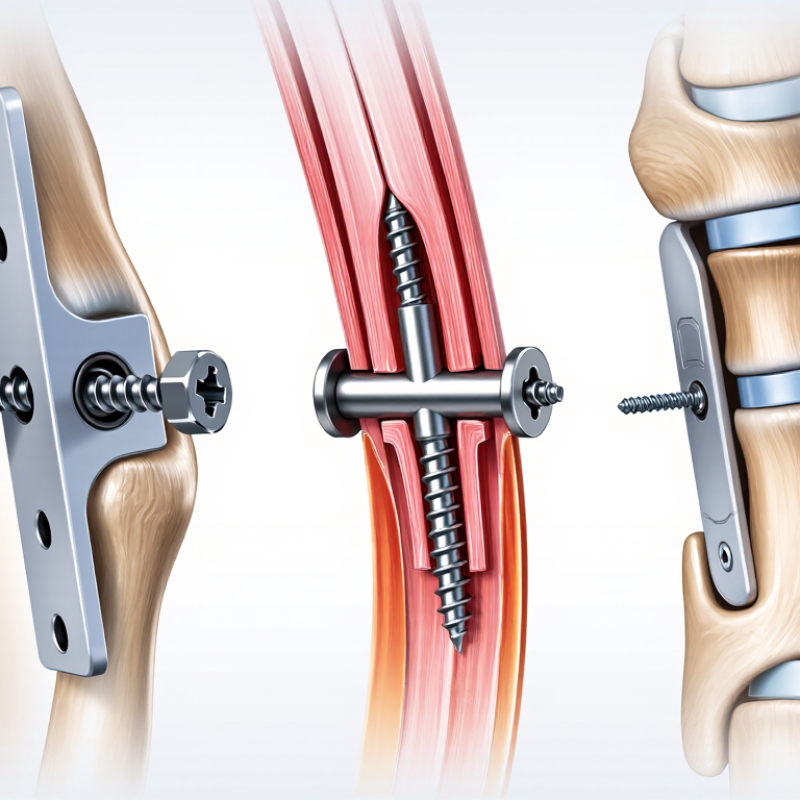
What Are the Top Types of Proximal Femoral Fixation Implants?

AO/OTA 31 Fracture Classification: Stable 31-A1 Versus Unstable 31-A2/A3

AO/OTA 31 fractures are not interchangeable patterns. In a 31-A1 fracture, the lateral wall and medial buttress usually remain intact, helping the bone resist collapse. A cephalomedullary nail or sliding hip screw may be considered, depending on the fracture and patient. The AAOS Management of Hip Fractures in Older Adults guideline (2021) supports either option for stable intertrochanteric fractures.

A 31-A2 fracture has greater comminution, often including loss of the posteromedial buttress. A 31-A3 fracture may be reverse-oblique or extend into the subtrochanteric region. These patterns can slide, shorten, or rotate under load. That changes the fixation question. AAOS recommends a cephalomedullary device for unstable intertrochanteric fractures; NICE guidance also identifies reverse-oblique patterns as an exception to its usual extramedullary-implant recommendation.

Look closely at the lateral wall and fracture line. A small fragment near the lesser trochanter can matter. So can poor bone quality. Classification helps, but it cannot replace imaging review or intraoperative judgment. The categories are useful, not perfect. Real fractures do not always fit neatly into one box. A sound implant choice must account for reduction quality, stability, and the patient’s ability to bear weight.

Dynamic Hip Screws: Sliding Fixation for Selected Stable Intertrochanteric Fractures

A dynamic hip screw (DHS) uses a large lag screw in the femoral head, connected to a plate on the outer femur. For selected stable intertrochanteric fractures, the screw can slide within the plate barrel as the patient bears weight. This allows controlled compression at the fracture rather than holding the fragments at a fixed distance. Small movements matter.

The fracture pattern guides whether this implant is suitable. An intact lateral wall helps limit excessive collapse, while reverse-obliquity fractures or a compromised lateral wall may need a different fixation strategy. Surgeons assess the reduction and screw position with imaging during the procedure; placement that looks acceptable in one view may not be ideal in another. That detail is easy to underestimate. Bone quality, overall health, and the patient’s ability to follow weight-bearing instructions also affect planning. The DHS is not a universal solution, and recovery can vary even when fixation is technically sound. There is rarely one simple measurement that settles every case.

What Are the Top Types of Proximal Femoral Fixation Implants?

Dynamic Hip Screws: Sliding Fixation for Selected Stable Intertrochanteric Fractures

This qualitative summary shows common fixation choices, not outcome rates. A dynamic hip screw is often an option for stable intertrochanteric fractures. Unstable or reverse-obliquity patterns, and fractures with subtrochanteric extension, are commonly treated with a cephalomedullary nail. The choice depends on the fracture pattern and patient factors.

Cephalomedullary Nails: Intramedullary Fixation for 31-A1 to 31-A3 Fractures

Cephalomedullary nails sit inside the femur, crossing the fracture and anchoring into the femoral head and neck. This position gives the implant a short lever arm and can help control bending forces. Surgeons commonly consider them for 31-A1, 31-A2, and 31-A3 intertrochanteric fractures, while matching nail length and design to the fracture pattern.

The patterns differ. A 31-A1 fracture is often relatively stable after reduction. A 31-A2 fracture may have a broken lateral wall or several small fragments. A 31-A3 fracture can run in a reverse-oblique direction, making sliding fixation less reliable. In each case, alignment matters. A nail cannot correct a poor reduction by itself. Small details matter.

During surgery, the cephalic screw or blade must be placed carefully within the femoral head. Fluoroscopy helps check its position and the restored alignment. Bone quality, fracture extension, and the patient’s overall condition can affect implant choice and postoperative loading. Not every case follows the textbook pattern. I would be cautious about treating the fracture label alone as a decision rule; imaging and hands-on assessment still matter.

Femoral Neck Fixation: Three Cannulated Screws or a Sliding Hip Screw

For femoral neck fractures, three cannulated screws and a sliding hip screw aim to hold the head and neck while healing occurs. Three screws are placed through small incisions, often in a triangular pattern. The sliding hip screw uses a larger side plate and permits controlled compression as the fracture settles. On the operating table, fracture alignment and bone quality matter as much as the implant choice.

The FAITH randomized trial, published in The Lancet in 2017, compared these methods in 1,108 patients. Reoperation occurred in 20% of sliding-hip-screw patients and 22% of patients treated with cancellous screws; the overall difference was not statistically significant. A subgroup analysis found fewer reoperations with the sliding hip screw for displaced fractures, but that result should not be treated as a rule for every patient. The AAOS Management of Hip Fractures in Older Adults guideline also emphasizes fracture stability when considering fixation. Small details count: a gap on the X-ray, weak bone, or poor screw placement can change the outlook. The evidence is helpful, not perfect. Surgeons should weigh fracture pattern, patient factors, and local expertise rather than choose by habit alone.

What Are the Top Types of Proximal Femoral Fixation Implants? - Femoral Neck Fixation: Three Cannulated Screws or a Sliding Hip Screw

Comparison dimension Three cannulated screws Sliding hip screw
Typical construct Usually three parallel cannulated screws arranged in an inverted triangle across the fracture. A large lag screw passes through a plate fixed to the femoral shaft; the screw can slide within the plate barrel.
Common fracture situations Often considered for nondisplaced or minimally displaced intracapsular femoral neck fractures, depending on patient and fracture factors. Often considered when greater mechanical support is needed, including some displaced, vertical, or basicervical fracture patterns.
Fracture compression Screw tightening can provide compression, but the amount and control depend on the construct and fracture pattern. The sliding mechanism is designed to permit controlled impaction and compression as the fracture settles during healing.
Implant footprint Several smaller screws; typically less implant bulk and no side plate. One larger lag screw plus a side plate, creating a more substantial construct.
Potential advantages Can be placed through a relatively limited approach and may be suitable when the fracture is stable after reduction. Provides a fixed-angle connection between the head-neck fragment and shaft, which can help resist shear in selected patterns.
Important limitations May be less effective in an unstable or highly vertical fracture; fixation failure and nonunion remain possible. Requires plate fixation to the shaft and may be less suitable for some fracture configurations; failure and nonunion remain possible.
Key decision factors Displacement, fracture orientation and stability, bone quality, patient age and health, ability to achieve and maintain reduction, and the treating surgeon’s assessment all matter.
Clinical context For older adults with displaced femoral neck fractures, arthroplasty is often considered instead of internal fixation. The appropriate treatment depends on the individual case and local clinical guidance.

This comparison is for general educational purposes; implant choice should be based on fracture assessment and a qualified clinician’s judgment.

Fixation Accuracy Benchmark: Tip–Apex Distance Under 25 mm to Reduce Cut-Out Risk

Proximal femoral fractures are commonly fixed with a sliding hip screw or a cephalomedullary nail. Fracture pattern and stability help guide implant selection. But even a well-chosen implant can fail if its head element is poorly positioned. Tip–apex distance (TAD) offers a practical check: it combines the corrected distance from the screw or blade tip to the femoral head apex on both AP and lateral X-rays.

In a 1995 Journal of Bone and Joint Surgery study, Baumgaertner and colleagues analyzed 198 fractures and identified TAD as an important predictor of cut-out. They proposed a target below 25 mm. This benchmark remains widely cited, but it is not a guarantee: reduction quality, bone condition, and implant placement also matter. Small measurement errors count. A rotated image or uncorrected magnification can make an acceptable TAD appear safer than it is.

Tips: Check calibrated AP and lateral views before closure. Aim for a central or slightly inferior position on the AP view, and central placement laterally. Keep the tip close to subchondral bone without entering the joint. Record the measured TAD and recheck the images. The threshold is useful; it is not the whole story.

FAQS

What makes a 31-A1 fracture different from 31-A2 or 31-A3?

A 31-A1 fracture usually keeps its lateral wall and medial support intact. A 31-A2 may have several fragments or lost support. A 31-A3 can run in a reverse-oblique direction or extend lower down the femur.

Why does fracture stability affect implant choice?

Unstable fractures may slide, shorten, or rotate when the leg bears weight. That can make some fixation methods less suitable. The fracture pattern is only part of the decision.

When might a cephalomedullary nail be considered?

It sits inside the femur and anchors into the head and neck. Its position can help control bending forces. Nail design and length depend on the fracture and patient.

Can a nail compensate for poor fracture alignment?

No. The bone still needs a suitable reduction. Imaging during surgery can help check alignment and implant position. Small details matter.

How do three cannulated screws differ from a sliding hip screw?

Three screws pass through small incisions, often in a triangular pattern. A sliding hip screw uses a side plate and allows controlled compression as the fracture settles.

What did a large trial find about these femoral neck fixation methods?

Reoperation occurred in 20% of patients treated with a sliding hip screw and 22% treated with screws. The overall difference was not statistically significant.

Does a sliding hip screw always suit displaced femoral neck fractures better?

No. A subgroup analysis found fewer reoperations for displaced fractures with that method. This finding may not apply to every patient.

What small details can affect the outlook after fixation?

A gap on an X-ray, weak bone, or poor screw placement can matter. Fracture pattern, patient condition, and surgical experience also affect decisions. Real cases can be messier than categories suggest.

Conclusion

Proximal Femoral Fixation Implants are selected according to the fracture pattern, stability, and the patient’s needs. In the AO/OTA classification, 31-A1 fractures are generally considered stable, while 31-A2 and 31-A3 patterns are typically less stable. A dynamic hip screw may provide sliding fixation for selected stable intertrochanteric fractures, whereas a cephalomedullary nail offers intramedullary support across a broader range of 31-A1 to 31-A3 fractures.

Femoral neck fractures may be fixed with three cannulated screws or, in appropriate cases, a sliding hip screw. Whatever construct is chosen, accurate placement is essential: keeping the tip–apex distance below 25 mm is a commonly used benchmark associated with a lower risk of fixation cut-out. The final choice and positioning should be guided by the specific fracture characteristics and clinical judgment.

Charlotte

Charlotte

Charlotte is a professional marketing specialist dedicated to helping businesses understand practical solutions, emerging market trends, and the value of reliable products and services. With a strong knowledge of the company’s offerings, she translates complex product features into clear, useful......
WhatsApp Chat with Siora Surgicals